
Mixed-SKU Packaging: Molded Pulp Tray Fit Guide
Mixed-SKU Packaging Projects: How to Match Molded Pulp Trays to Multiple Product Profiles
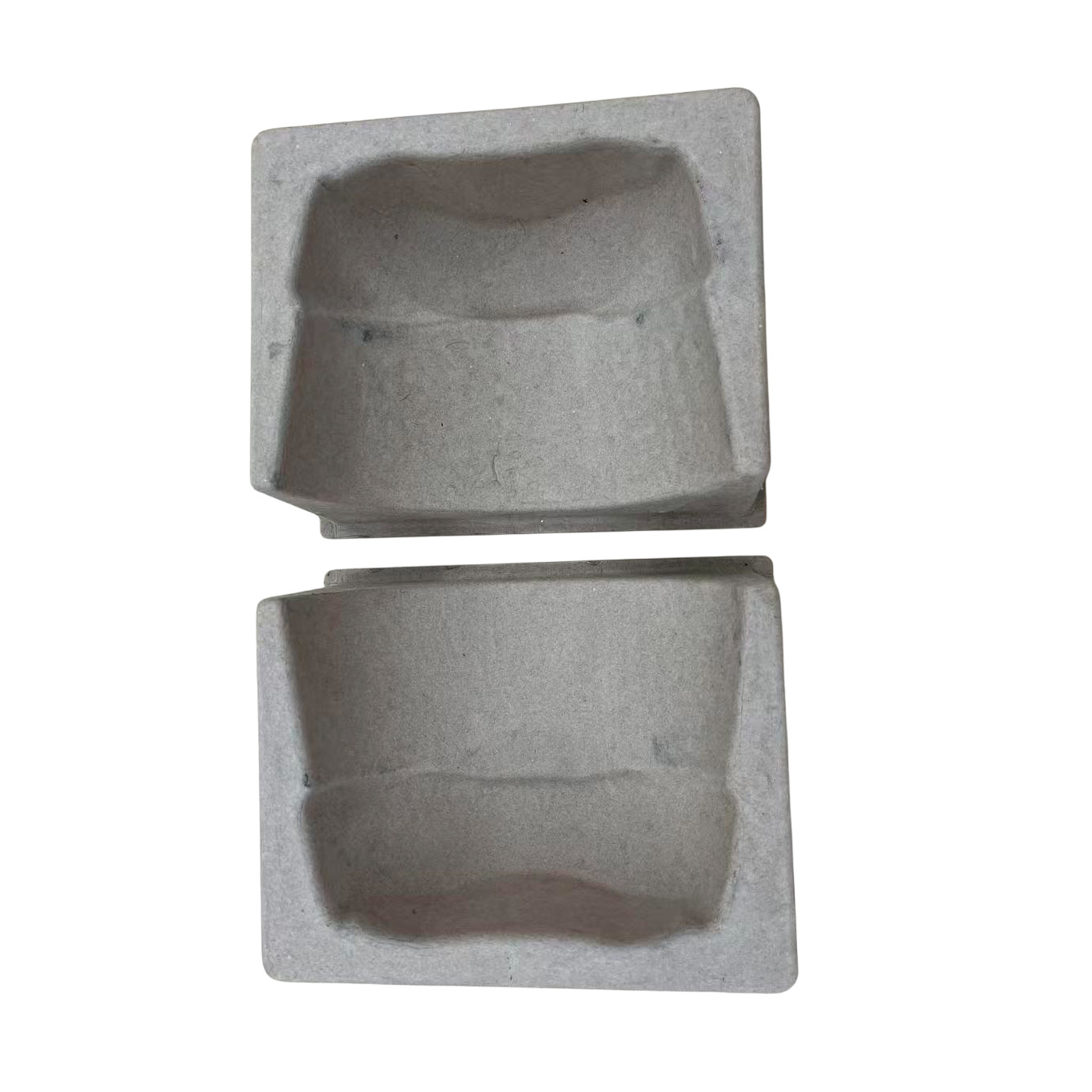
Molded pulp trays can be organized into a tray family that serves several product profiles in one packaging project.
A mixed-SKU packaging project rarely fails because one tray is badly made. It fails because the tray system was designed around a single hero product and then stretched across a catalogue of products with different dimensions, weights, surface finishes, and handling risks. Matching molded pulp trays to a mixed-SKU project starts with a SKU profile matrix, not a tray catalogue. The matrix groups products by handling requirement, translates each group into tray specifications, and sets acceptance criteria before tooling is approved.
This guide is for packaging buyers, procurement teams, and product development staff who are scoping a molded pulp tray programme across several products at once. It covers project scoping, tray fit, handling requirements, and the purchasing terms that should be confirmed before an order is placed. It does not promise a particular protection result; those outcomes depend on the actual product, tray design, packing method, and transport route.
What makes a packaging project “mixed-SKU”?
A mixed-SKU packaging project is a programme in which one packaging system serves multiple stock-keeping units that differ in size, shape, weight, fragility, surface sensitivity, or regulatory category. The complication is not the number of SKUs. It is the number of different handling requirements that must be satisfied by a shared tray family, a shared carton footprint, or a shared tooling budget.
Three failure modes appear often in mixed-SKU tray projects:
- One tray forced across products it cannot fit. The product moves inside the cavity, surface contact increases, and the packing line slows down because operators must adjust each item.
- Every SKU receives a unique tray. Tooling cost multiplies, storage space grows, and replenishment becomes difficult because each variant has its own order cycle.
- The tray fits the product but not the packing line. The cavity is accurate, but the tray cannot be loaded at the required rate, or it does not stack with the existing carton and pallet configuration.
The buyer’s task is to find a workable middle ground: enough tray variants to fit the product range, but not so many that tooling, storage, and ordering become unmanageable. That middle ground is found through grouping, not through one-off tray design.
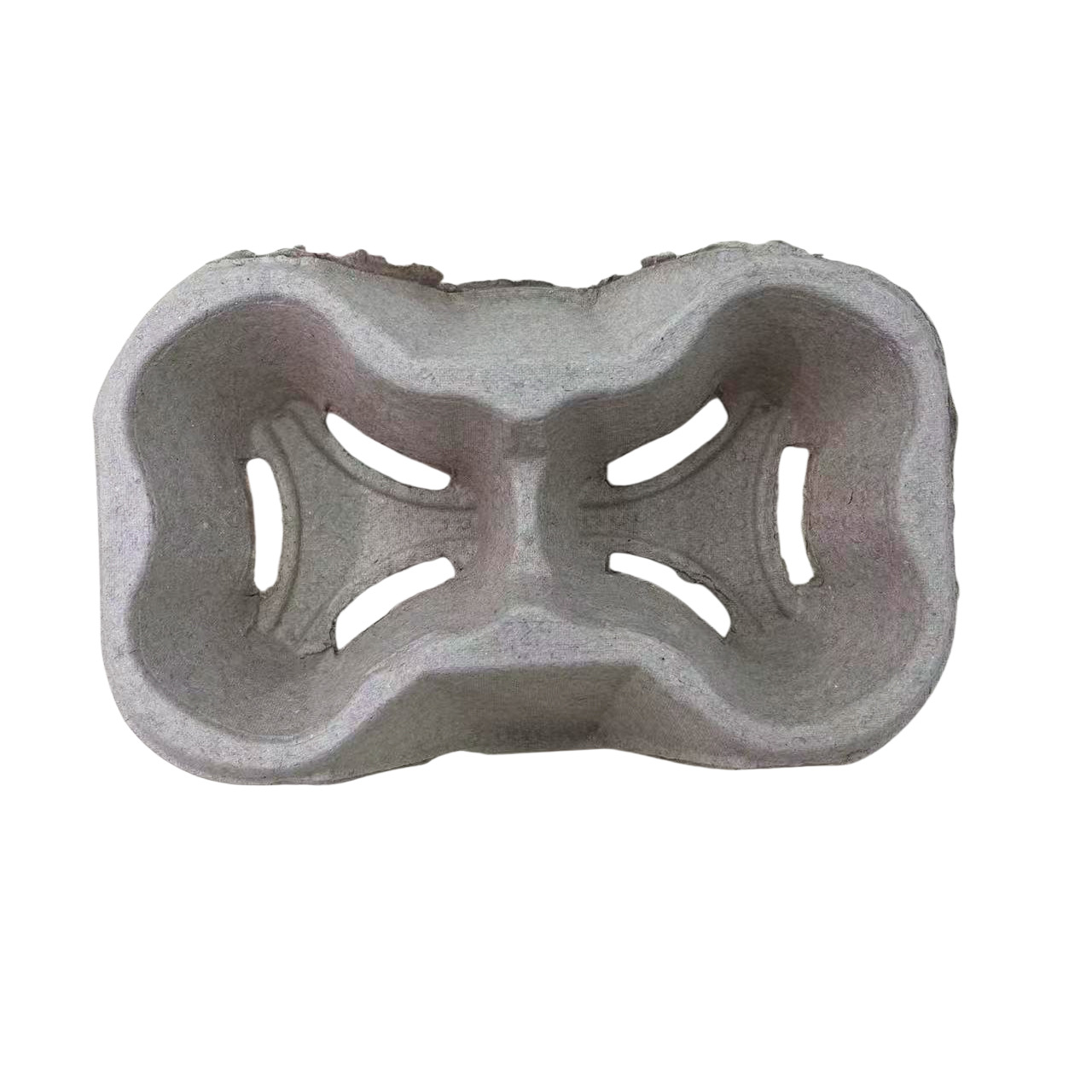
Custom molded pulp trays can combine several cavities in one tray, but a mixed-SKU programme still needs a rule for grouping products.
Industry background: why molded pulp tray projects are growing
Molded pulp is already a mainstream tray material in several packaging categories. Grand View Research estimates the global molded pulp packaging market at USD 6.2 billion in 2025 and projects USD 10.2 billion by 2033. The same source places Asia Pacific at 41.0% of 2025 revenue and identifies trays as the leading product segment with more than 41.0% share. A separate Smithers estimate of USD 4.5 billion for 2025 shows that market-size figures depend on product definition, so buyers should treat them as directional rather than as a precise budget input.
Regulation is another background factor. The EU Packaging and Packaging Waste Regulation (EU) 2025/40 entered into force on 11 February 2025 and requires all packaging to be recyclable by 1 January 2030. For mixed-SKU projects sold into Europe, the tray family is not only a protective component; it becomes part of a recyclability claim that must hold across every SKU in the programme.
Molded pulp trays are made from plant fibers such as sugarcane pulp, bamboo pulp, and wood pulp. Tonghe Paper Co., LTD, a pulp molding manufacturer based in Dongguan, China, produces molded pulp trays in these materials with custom colors and thicknesses. The company states that its plant-fiber material can fully biodegrade in 28 days under natural composting conditions. These material properties matter for the project brief, but they do not by themselves determine whether a tray will fit a given SKU. Fit is a geometry and handling question, and it has to be checked product by product.
The solution: a four-layer mapping process
The practical solution is to map the project in four layers: the SKU profile matrix, the handling groups, the tray specification family, and the acceptance and commercial terms. Each layer narrows the options. The goal is not to specify every tray at once; it is to establish the rules that let the project team specify trays consistently as new SKUs are added.
Layer 1 — SKU profile matrix
The matrix records what each product needs from the tray. It should include dimensions, weight, center of gravity, fragility class, surface finish, orientation constraints, quantity per carton, storage conditions, and end-market requirements. This is the single source of truth for the project.
Layer 2 — Handling groups
Products are grouped by what the tray must do, not by product family. Typical groups include fragile low-weight items, heavy or dense items, food-contact items, cosmetic items, medical or technical items, and multi-part kits. Each group can share a tray family even when the products are different.
Layer 3 — Tray specification family
Each handling group is translated into material, thickness, density, strength, color, surface treatment, and temperature range. The specification family sets the common requirements, while the cavity geometry changes by product.
Layer 4 — Acceptance and commercial terms
Acceptance criteria are written before the first production run, and commercial terms are confirmed against the project scope. This layer prevents a technically good tray from becoming a purchasing problem.
Step-by-step breakdown
Step 1 — Build the SKU profile matrix
For each SKU, record the following data in a shared spreadsheet:
- External dimensions (length × width × height), including caps, labels, cables, and other protrusions.
- Weight, and the location of the heavy end or center of gravity.
- Fragility class: rigid, scratch-sensitive, impact-sensitive, or deformation-sensitive.
- Surface finish: painted, polished, soft-touch, printed, or bare.
- Orientation constraints: must stay upright, must not rest on a connector, or must be presented at a fixed angle.
- Quantity per carton and per pallet.
- Storage and transport conditions: humidity, temperature range, stacking load.
- End-market requirements: food contact, medical, cosmetic, or general industrial.
The matrix should be built in a spreadsheet, not in prose. A tray designer can work from dimensions; a procurement team can work from quantities and end-market flags. When a new SKU is added, the matrix shows which existing tray family is the closest starting point.
Step 2 — Group SKUs by handling requirement
A common mistake is to group by product family. A more useful grouping is by what the tray must do. For example:
- Fragile, low-weight items need cavity support and surface protection. The tray should hold the product without point pressure.
- Heavy or dense items need edge crush strength and a reinforced base. The tray should not collapse under the product’s own weight during stacking.
- Food-contact items need a food-grade material and a temperature range that covers the filling or storage step.
- Cosmetic items need a clean surface, accurate cavity edges, and optional embossing or printing.
- Medical or technical items need precise positioning, low dust, and a clean production environment.
- Kits or multi-part sets need several cavities in one tray, or a tray plus a lid, with a fixed layout.
Each group can share a tray family even when the products are different. The group defines the performance requirement; the tray design defines the geometry.
Step 3 — Translate each group into a tray specification
Molded pulp trays are not specified by a single number. The relevant parameters include material, thickness, wet and dry pressure values, moisture content, edge crush strength, compressive strength, color, surface treatment, and temperature range. Tonghe lists the following ranges across its molded pulp tray range:
- Raw materials: sugarcane pulp, bamboo pulp, wood pulp, with customization available.
- Thickness: 0.8–5.0 mm, customized as required.
- Wet pressure: 0.15–0.25 g/cm³.
- Dry pressure: 0.28–0.45 g/cm³.
- Moisture content: ≤8–12%.
- Edge crush strength: 3–8 kN/m.
- Compressive strength: 2–8 MPa.
- Color: natural, white, yellow, or customized.
- Temperature range: −20°C to +80°C for the general range; food-grade material can be used from −20°C to +120°C.
These are material and process ranges, not a promise that any single tray will meet a particular drop height. The buyer should use them to narrow the specification and then confirm the final combination with a physical sample. For example, a heavy item may need a thicker wall and a different cavity draft, while a cosmetic item may need a smoother surface and a tighter color match.
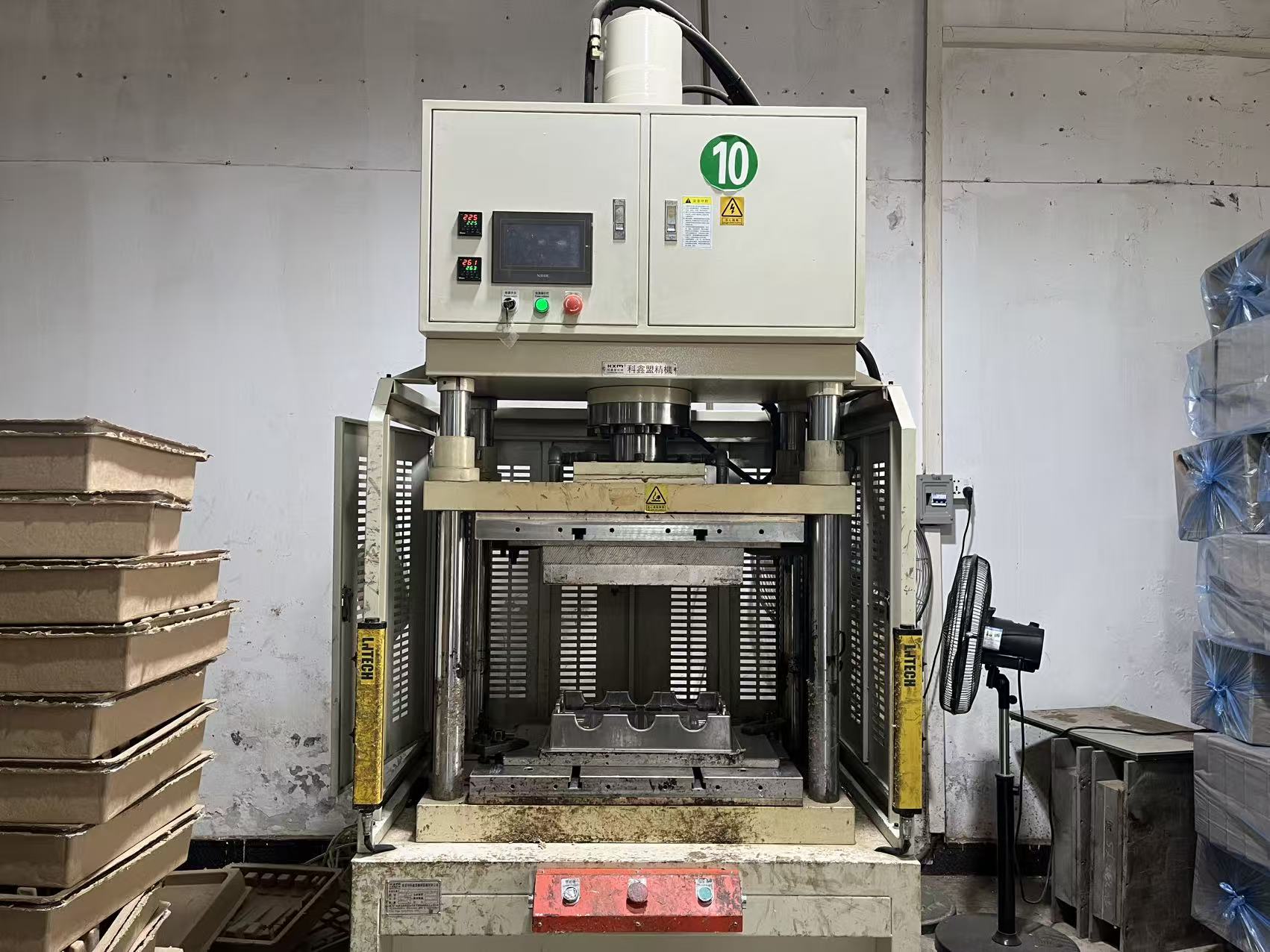
Hot-press forming is one of the process steps that determines tray density, surface finish, and dimensional consistency.
Step 4 — Prototype the high-risk SKUs first
Not every SKU needs a prototype before tooling. Prioritize the SKUs that carry the most risk:
- The heaviest SKU.
- The most fragile SKU.
- The SKU with the most complex geometry.
- The SKU with the tightest regulatory requirement.
- The SKU with the highest order volume.
A prototype should be checked for cavity fit, insertion and removal force, surface contact, stacking, and compatibility with the packing line. The check should use the actual product or a dimensionally accurate surrogate. A tray that fits a catalogue drawing may not fit a product with a label, a cap, or a cable. The prototype stage is also the right time to check whether one tray can serve two similar SKUs, which reduces the number of variants in the programme.
Step 5 — Define acceptance criteria before production
Acceptance criteria turn a tray from a sample into a purchasable item. For a mixed-SKU project, the criteria should be written per tray family and, where necessary, per SKU. Useful criteria include:
- Cavity dimensions and tolerance.
- Product retention: the product should not move when the tray is tilted or inverted under the agreed test condition.
- Edge quality: no loose fiber, no sharp edges, no delamination.
- Surface appearance: color match, print or emboss registration, and acceptable variance.
- Moisture content: within the agreed range at the time of packing.
- Stacking: the loaded tray should stack without collapse under the agreed load.
- Cleanliness: dust level appropriate to the product category.
- Packaging: tray count per carton, carton marking, and pallet configuration.
The criteria should be measurable. “Good fit” is not an acceptance criterion. “The product does not move more than the agreed limit in the cavity under the agreed handling check” is a usable criterion.
Step 6 — Confirm commercial terms against the project scope
Mixed-SKU projects often have a longer ramp-up and a more complex order pattern than single-SKU projects. Before ordering, confirm:
- MOQ per tray variant, not just per project. Tonghe lists a MOQ of 1,000 pcs.
- Tooling cost and ownership per tray design.
- Lead time per variant. Tonghe lists 15–30 days.
- Payment terms. Tonghe accepts T/T and Alibaba Trade Assurance.
- Shipping method. Tonghe can ship by sea, air, or express (DHL/FedEx/UPS); the buyer should provide the destination port or address for a freight calculation.
- Capacity for the combined programme. Tonghe lists a monthly capacity of 1,000 tons.
- Change process for adding a new SKU after the programme starts.
These terms should be recorded in the project brief, not left to the first purchase order. A mixed-SKU programme that adds SKUs later will need a clear process for tooling, sampling, and approval.
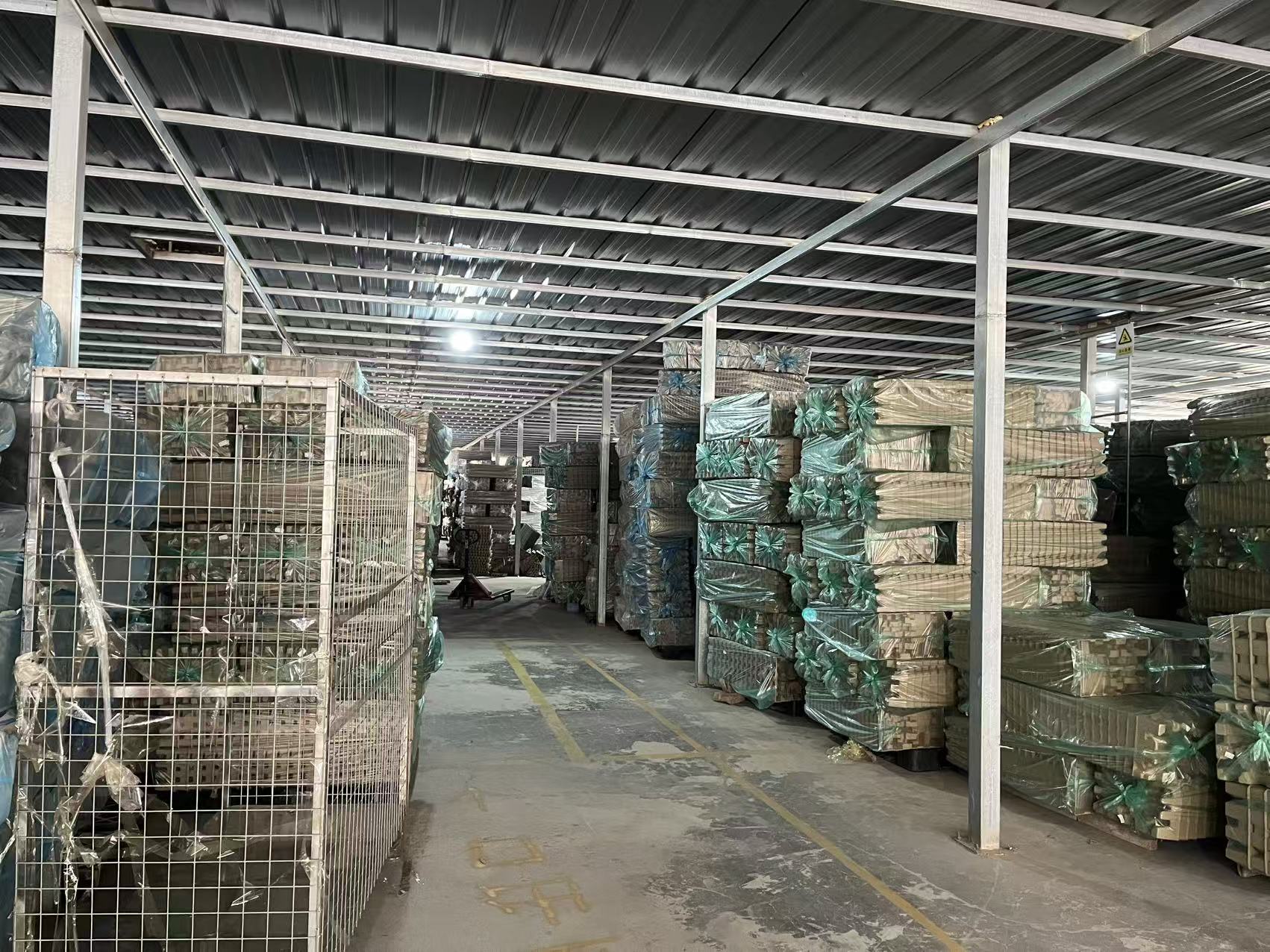
A multi-variant tray programme changes storage and replenishment planning, so warehouse capacity should be part of the commercial review.
Use cases: how the mapping works in practice
Medical device packaging
A medical device project may include probes, handles, catheters, and surgical instrument components in the same programme. These items differ in shape and sensitivity, but they share a need for precise positioning and low dust. Tonghe’s medical device pulp trays are described as one-piece molded with customized cavities for these component types, supporting EO sterilization, and made from virgin wood pulp free of fluorescent agents in a clean workshop. For a mixed-SKU medical project, the tray family can use a common material and cleanliness specification while the cavity geometry changes by component. The buyer should confirm sterilization compatibility and material inspection documentation for each tray variant.
Cosmetic packaging
A cosmetic gift set may combine a bottle, a jar, an applicator, and a carton in one box. The tray must protect the surfaces and present the products in a fixed layout. Tonghe’s cosmetic packaging pulp trays are described as custom-fit inserts with anti-scratch cushioning protection and customizable color and thickness. In a mixed-SKU cosmetic project, the tray family should share a surface finish and color standard, while cavity depth and retention features vary by component. Embossing or printing can be used for brand display, but the registration should be included in the acceptance criteria.
Food and fresh produce
A food project may include several container sizes or several product types with different moisture and temperature requirements. Tonghe’s food-grade molded pulp trays list a temperature range of −20°C to +120°C for food-grade material, while the general tray range lists −20°C to +80°C. For a mixed-SKU food project, the buyer should separate ambient, chilled, and heated applications and confirm that the selected material grade covers the worst-case temperature. The tray should also be checked for food-contact compliance in the destination market. Tonghe’s case record includes a 2,000-unit order for restaurant and supermarket packaging across markets including Australia, Canada, Germany, and the United States, with shockproof and shatterproof handling as the stated application requirement.
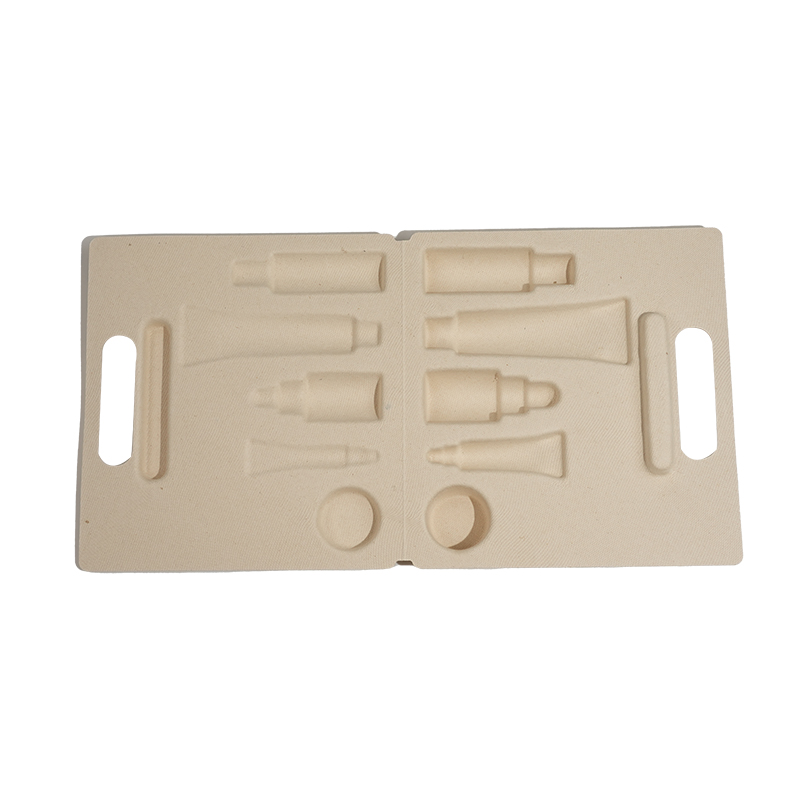
Cosmetic trays show how a shared surface standard can coexist with component-specific cavity layouts.
Electronics and appliances
An electronics project may include a device, a power adapter, a cable, and a manual. The tray may need anti-static protection, which Tonghe lists as an available customization. In a mixed-SKU electronics project, the tray family can use a common anti-static specification while the cavity layout changes by product. The buyer should confirm that the anti-static option is applied to every tray variant in the programme, not only the main device tray.
Mixed-SKU tray decision table
The table below connects common project situations to a tray approach, a specification to confirm, and a commercial term to settle. It is a starting point for the project brief, not a final specification.
| Project situation | Recommended tray approach | Key specification to confirm | Commercial term to confirm |
|---|---|---|---|
| Three to six similar small items with low weight | One tray family with interchangeable cavities | Cavity dimensions, thickness, moisture content | MOQ per variant, tooling cost |
| Mixed fragile and heavy items | Separate tray families by handling group | Edge crush strength, compressive strength, base reinforcement | Lead time per family, capacity |
| Food-contact products with different temperatures | One food-grade material family, separate cavity layouts | Food-grade temperature range, moisture resistance | Food-contact documentation, shipping method |
| Cosmetic gift sets with surface sensitivity | Shared surface finish, individual cavity depths | Surface treatment, color match, emboss registration | Sampling approval, packaging count |
| Medical components requiring low dust | Common clean material, component-specific cavities | Cleanliness, sterilization compatibility, material report | Inspection documentation, change process |
| Multi-part kits | Multi-cavity tray or tray plus lid | Cavity layout, retention, stacking | Tooling complexity, sample lead time |
Frequently asked questions
What should a mixed-SKU molded pulp tray project define before contacting a manufacturer?
A mixed-SKU project should define the SKU list, dimensions, weights, handling groups, expected quantities, end-market requirements, and acceptance criteria before requesting a quote. A manufacturer can propose a tray family from a clear matrix; without one, the quote is likely to be based on assumptions that later change. The matrix also helps the buyer compare quotes on the same basis, rather than comparing different assumptions.
Can molded pulp trays be customized for different products in the same project?
Yes. Tonghe offers OEM/ODM customization for material, color, logo, anti-static function, and moisture-proof function. Cavity geometry can be developed for different product shapes. The project should confirm which customization applies to each tray variant and include it in the acceptance criteria. A common customization, such as anti-static treatment, should be specified for every variant that needs it, not assumed from the main tray.
Can Tonghe supply molded pulp trays for medical device packaging?
Tonghe’s medical device pulp tray range is described as one-piece molded with precise positioning, low dust, and customized cavities for probes, handles, catheters, and surgical instrument components. The range supports EO sterilization and uses virgin wood pulp free of fluorescent agents in a clean workshop, with a material inspection report. A medical buyer should confirm the specific sterilization, cleanliness, and documentation requirements for each component before approval.
What is the minimum order quantity and lead time for custom molded pulp trays?
Tonghe lists a MOQ of 1,000 pcs and a lead time of 15–30 days. For a mixed-SKU project, the buyer should confirm whether the MOQ applies per tray variant or per combined order, and whether the lead time is calculated from sample approval or from tooling completion. These details affect the launch plan for the whole programme, especially when several variants are ordered together.
What payment terms and shipping methods apply to a mixed-SKU order?
Tonghe accepts T/T and Alibaba Trade Assurance. Shipping can be arranged by sea, air, or express (DHL/FedEx/UPS). The buyer should provide the destination port or address so freight can be calculated. Payment and shipping terms should be confirmed per order, especially when the programme includes several tray variants with different lead times.
How many tray variants should a mixed-SKU project use?
Use the smallest number of tray variants that still meets the handling requirements of each SKU group. A single variant that fits every product is preferable for tooling and storage, but it should not be forced if it creates movement, surface damage, or packing-line problems. Grouping by handling requirement usually produces fewer variants than grouping by product category, because products with different shapes can still share the same protection and material requirements.
How should a buyer validate tray fit before production?
Validate tray fit with a physical sample against the actual product or a dimensionally accurate surrogate. Check cavity fit, insertion and removal force, surface contact, stacking, and packing-line compatibility. Record the results against the acceptance criteria and approve the sample before tooling. Tonghe supports customer sample requests for comparison and testing, so the buyer can evaluate a proposed tray family against the SKU matrix before committing to production. To discuss a mixed-SKU project or request a sample, contact Tonghe through the company website or download the brochure below.
Plan the next step for a mixed-SKU tray project
Tonghe Paper Co., LTD produces molded pulp trays in sugarcane, bamboo, and wood pulp, with OEM/ODM customization, a monthly capacity of 1,000 tons, and export experience across Europe, North America, the Middle East, and other markets. The practical next step is to build the SKU matrix described in this guide and request a tray family proposal against it.
Download the Tonghe product and capability brochure (PDF)
Conclusion
A mixed-SKU molded pulp tray project is a specification problem before it is a purchasing problem. The buyer who builds a SKU matrix, groups products by handling requirement, translates each group into a tray specification, and writes acceptance criteria before tooling will get a more predictable tray family and fewer late-stage changes. The commercial terms — MOQ, lead time, payment, and shipping — should be confirmed against the same project scope, because a multi-variant programme has a different order rhythm from a single-SKU order.
Tonghe Paper Co., LTD produces molded pulp trays in sugarcane, bamboo, and wood pulp, with OEM/ODM customization, a monthly capacity of 1,000 tons, and export experience across Europe, North America, the Middle East, and other markets. For buyers scoping a mixed-SKU project, the next practical step is to build the SKU matrix and request a tray family proposal against it.
Have Questions or Need More Details?
Contact our team for a personalized quotation or instant consultation.
Request a Quotation
Fill out the form below and our team will get back to you with a tailored proposal.
WhatsApp Direct Chat
Prefer to chat in real-time? Message us on WhatsApp for instant assistance & quick answers.
- Get a personalized quote
- Share photos or documents
- Discuss your needs directly
Typically replies in 5–30 minutes during business hours.