
Molded Pulp Supplier Evaluation: Capability, Delivery Assurance, and Payment Terms
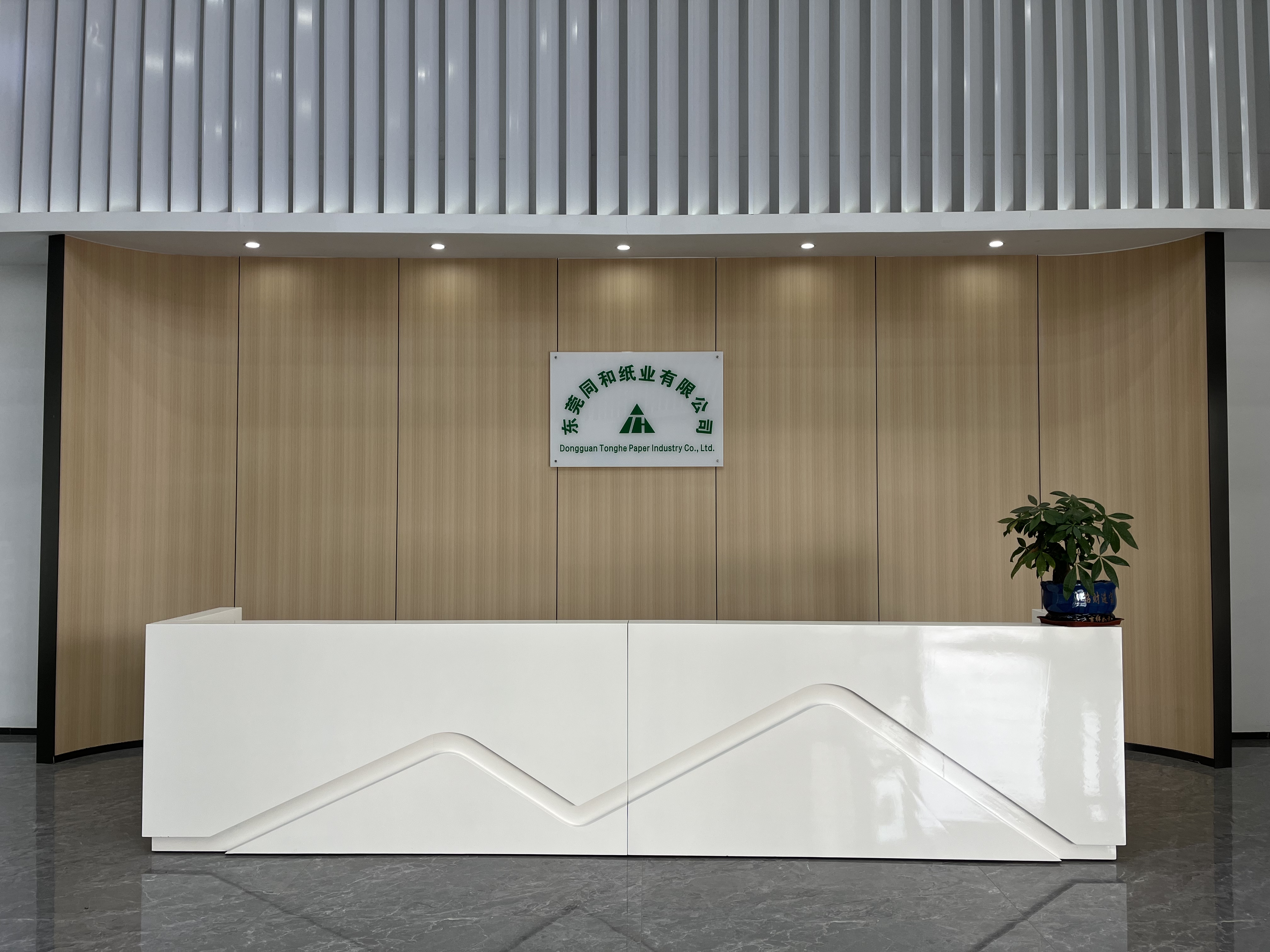
Molded pulp supplier evaluation comes down to three verifiable pillars: production capability, delivery assurance, and payment and shipping terms. For a buyer at the decision stage, unit price alone is a weak signal — two suppliers can quote an identical cost per tray while differing in tooling ownership, dimensional control, drying capacity, export documentation, and the commercial terms that ultimately determine landed cost.
This guide is written for importers, brand owners, and procurement managers comparing molded fiber and molded pulp tray suppliers who need to close a purchase decision. It explains how to ask about production capability for molded pulp, how to clarify payment terms and shipping methods, and which purchasing terms and acceptance criteria should be confirmed in writing before a purchase order is released.
Direct answer: Score every molded pulp supplier against three documented evidence sets — (1) forming, tooling, and quality capability; (2) capacity, drying, and shipping readiness; and (3) agreed commercial terms covering payment method, shipping method, Incoterms, and acceptance criteria. Tonghe Paper Co., Ltd., a pulp molding manufacturer based in Dongguan, Guangdong, China, documents a 23,000 m² factory, in-house mold development with a 12-engineer R&D team, monthly capacity up to 1,000 tons, ISO 9001 / ISO 14001 / FSC certification, and accepts T/T and Alibaba Trade Assurance with shipping by sea, air, or express.
Problem Definition: Why Unit-Price Comparison Misses the Real Risk
Most molded pulp purchasing problems are not material problems. They are evaluation problems. When a buyer compares suppliers only on cost per tray, three gaps stay invisible until goods are already moving.
- Capability gap — a supplier can quote a complex or irregular tray geometry but cannot hold wall thickness, edge finish, or dimensional tolerance in repeat production.
- Delivery gap — capacity is quoted as a monthly tonnage, while drying, stacking, and export packing constraints actually decide the ship date.
- Terms gap — payment method, shipping method, price validity, and acceptance criteria stay verbal, so neither side holds a written benchmark when the first container is inspected.
Before requesting quotations, reduce the evaluation to three questions that a serious supplier can answer with documents rather than adjectives:
- Can the supplier produce my geometry, at my tolerance, repeatedly — and can it prove this through tooling, equipment, and a testable sample?
- Can the supplier deliver on the promised date in export-ready condition, including drying, stacking, and packing?
- Are the payment, shipping, and quality terms specific enough that both sides agree in advance on what "accepted" means?
If a supplier answers all three with evidence, it belongs on the shortlist. If it answers only the third one with a price, the comparison has not started yet.
Industry Background: Why Supplier Screening Carries More Weight in 2025–2030
Molded pulp is no longer a niche substitute product, and the regulatory clock is now part of the purchasing calculation. Five data points frame the current environment:
- The global molded pulp packaging market was valued at USD 6.2 billion in 2025 and is projected to reach USD 10.2 billion by 2033 (Grand View Research).
- Asia Pacific accounted for a 41.0% revenue share of that market in 2025, with China holding the largest market share (Grand View Research).
- Trays were the leading product segment in 2025, accounting for over 41.0% of revenue share (Grand View Research).
- The EU Packaging and Packaging Waste Regulation (EU) 2025/40 entered into force on 11 February 2025 and requires all packaging to be recyclable by 1 January 2030.
- Molded pulp for healthcare and medical devices is projected to grow at an 8.6% CAGR, driven by ISO sterilization standards and plastic bans in hospitals (Mordor Intelligence).
Two consequences follow for buyers. First, demand growth is absorbed by a limited number of qualified molded fiber producers, so capacity and delivery reliability become competitive, not guaranteed. Second, recyclability and material compliance are converting from marketing statements into dated legal requirements with a 2030 deadline. Supplier screening therefore shifts from "who is cheapest per piece" to "who can supply a compliant, repeatable product on the agreed date, on written terms."
Detailed Solution: The Three-Pillar Supplier Evaluation Framework
Pillar 1 — Production Capability: Convert Claims into Evidence
Production capability for molded pulp should be verified as equipment, tooling, scale, and material control — each supported by a document. The table below shows what to request and how Tonghe Paper Co., Ltd. answers each item.
| Evaluation area | Evidence to request | Tonghe Paper documented value |
|---|---|---|
| Forming and pressing equipment | Equipment list and process description for forming and hot pressing | Complete forming and hot-pressing equipment across multiple automated production bases |
| Mold development | Whether molds are designed and manufactured in house, and who owns the tooling | In-house mold development capability; R&D team of 12 engineers |
| Production scale | Factory area, headcount, monthly and annual capacity | 23,000 m² factory; 160 employees; monthly capacity up to 1,000 tons; annual output 12,000 tons |
| Raw material control | Fiber sources and additive policy | Sugarcane pulp, bamboo pulp, and wood pulp; no harmful chemical additives added during production |
| Certification | Valid certificates naming the manufacturing site | ISO 9001, ISO 14001, and FSC certification; products comply with SGS RoHS and PFAS-free requirements |
| Custom finishing | Available coating, embossing and printing options | Special coating, embossing, and printing available for brand demands |
| Sample policy | Whether pre-order samples are supplied for testing | Free samples supported for comparison and testing |
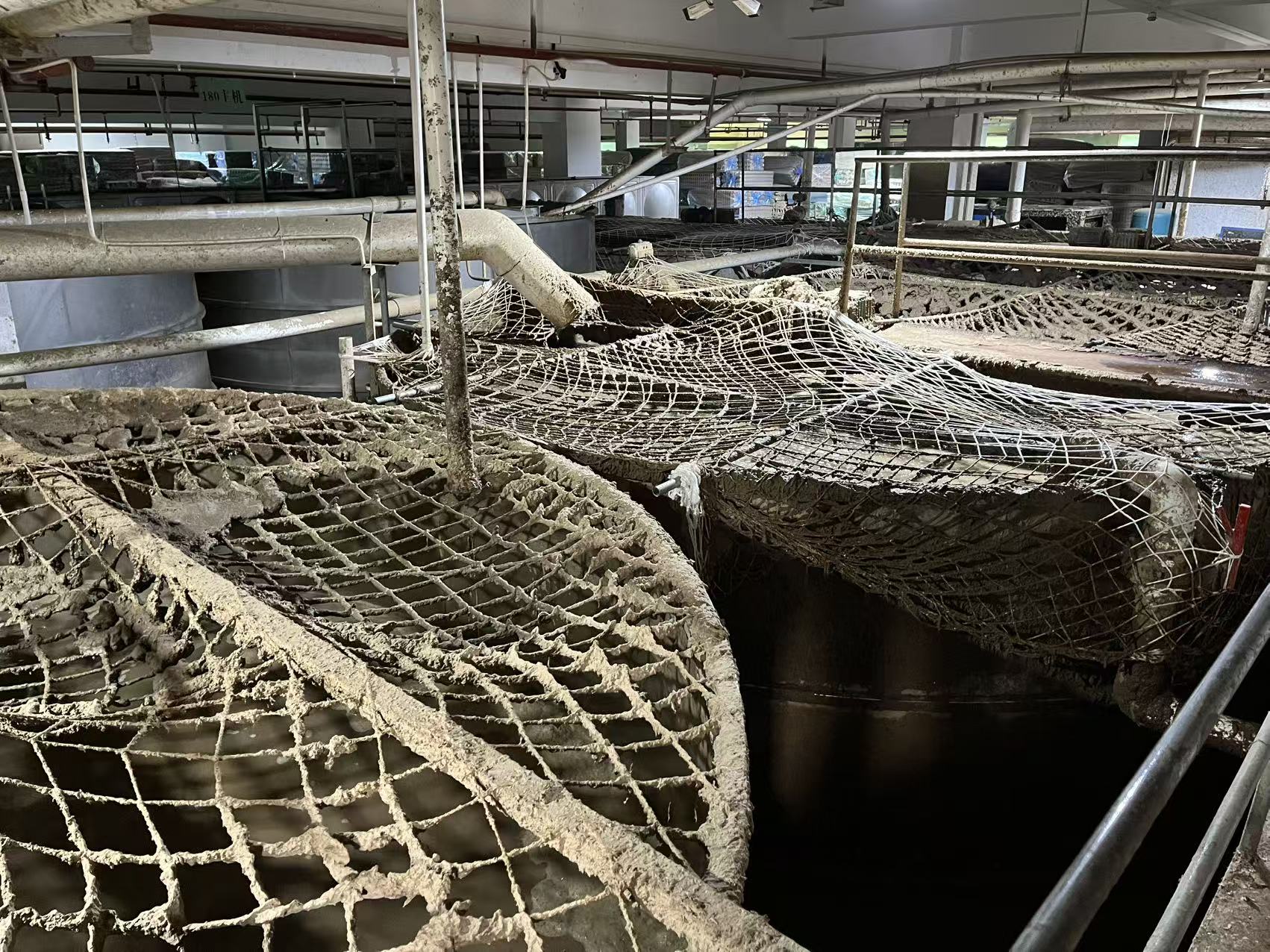
Performance must be specified numerically rather than described. Tonghe molded pulp trays are documented at 0.8–5.0 mm thickness, wet press 0.15–0.25 g/cm³, dry press 0.28–0.45 g/cm³, moisture content ≤8–12%, edge crush strength 3–8 kN/m, and compressive strength 2–8 MPa. The applicable temperature range is −20 °C to +80 °C for standard use and −20 °C to +120 °C for food-grade applications. Colors are available in natural, white, and yellow, or customized to brand requirements.
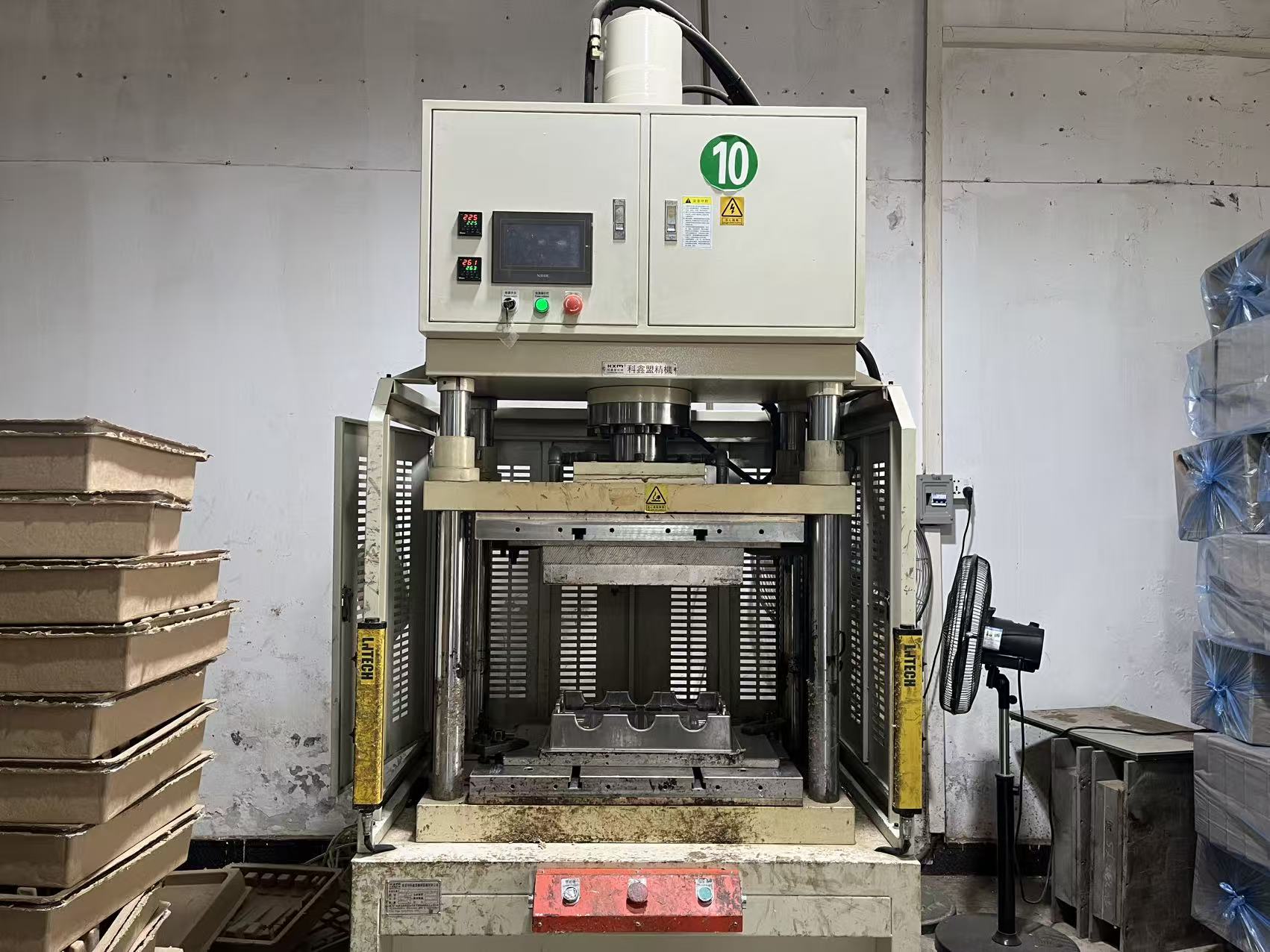
Material selection supports the compliance side of the evaluation. The company states that its raw materials are natural plant fibers — wood pulp, bamboo pulp, and sugarcane pulp — with no harmful chemical additives added during processing, and that the material achieves 100% biodegradation in 28 days in a natural composting environment. In-house mold development also means irregular, multi-specification structures can be engineered to fit a specific product contour rather than forced into a standard tray, which is the practical difference between commodity trays and Custom Molded Pulp Trays.
Pillar 2 — Delivery Assurance: Capacity, Drying, and Shipping Readiness
Delivery assurance is not the same as capacity. Capacity answers "how much can be formed per month"; delivery assurance answers "when will the finished, export-packed goods be ready." Three checkpoints separate the two.
Checkpoint 1 — Committed capacity. Tonghe Paper reports monthly capacity up to 1,000 tons and annual output of 12,000 tons, with approximately 50% of output exported to the EU, USA, Australia, Saudi Arabia, Malaysia, and Brazil. An export ratio at that level means export documentation and carton specification are routine operations rather than exceptions — a delivery-credibility signal worth verifying during supplier screening.
Checkpoint 2 — Drying control. Drying is the step buyers most often overlook. Molded fiber trays that leave the press above the specified ≤8–12% moisture content can deform in transit or in a humid warehouse. Ask directly about drying cage capacity and air-drying area, and confirm how moisture is checked before packing.
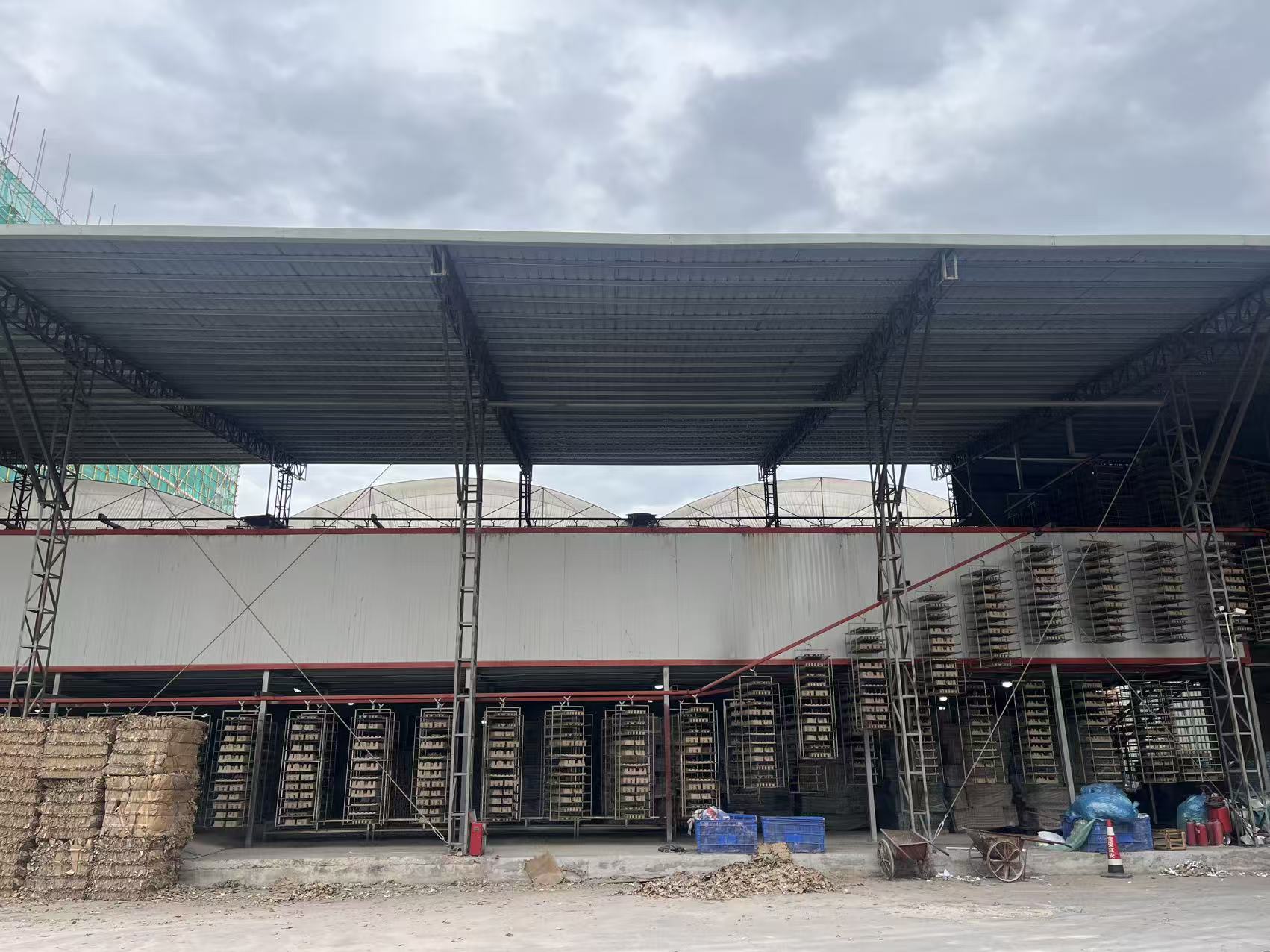
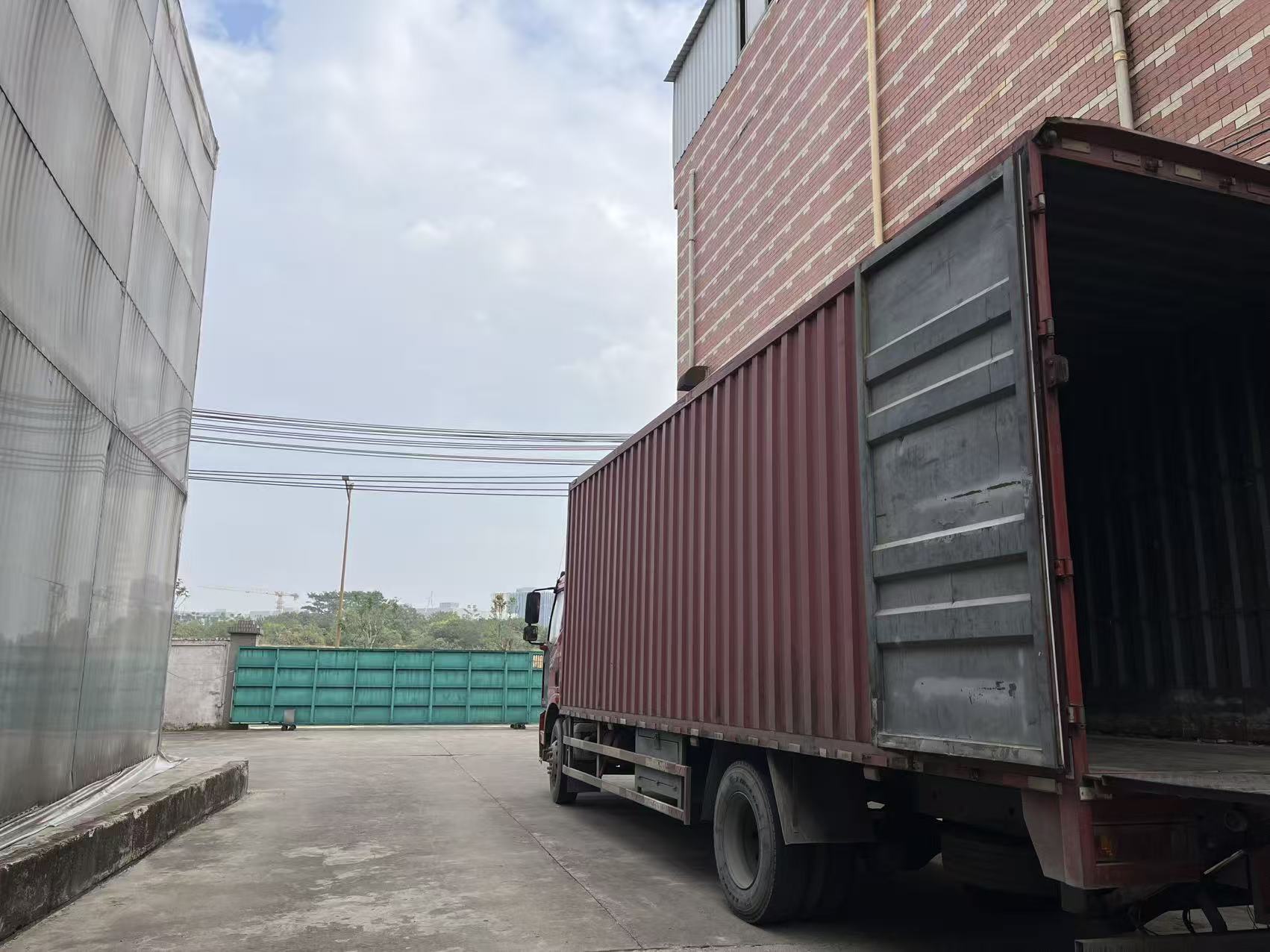
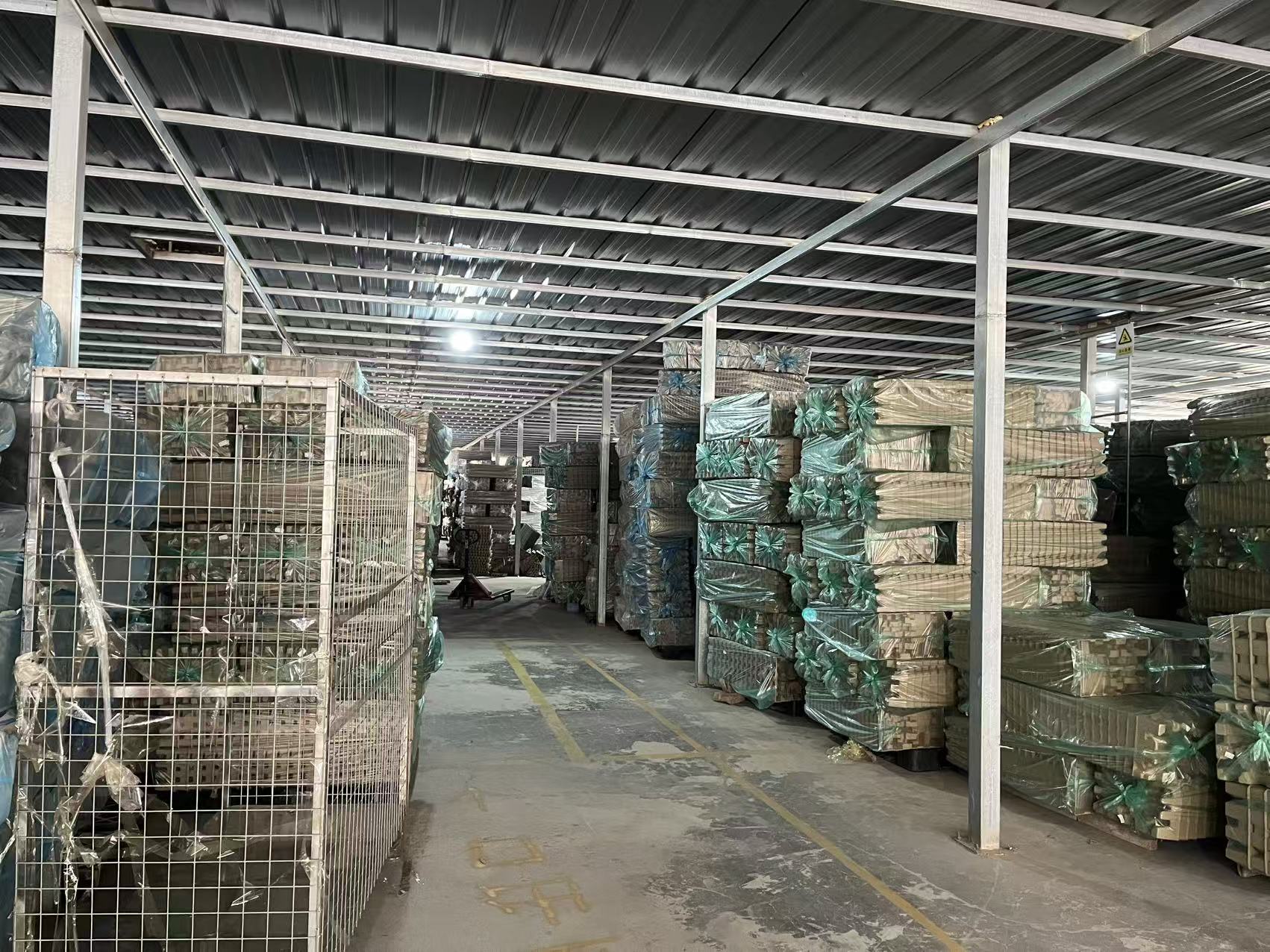
Checkpoint 3 — Stacking and packing efficiency. Nested stacking of molded pulp trays saves approximately 40–60% of space compared with non-nested packing, which directly reduces container and warehouse cost. Molded pulp also weighs around 50% less than traditional hard gift boxes, lowering freight cost per unit. Before ordering, confirm pallet and carton specification, labeling, loading method, and the shipping method that matches your timeline — sea for volume, air or express for urgency.
Pillar 3 — Payment Terms, Shipping Methods, and Commercial Risk
Commercial terms deserve the same documentation standard as technical specifications. On payment and shipping, Tonghe Paper Co., Ltd. accepts T/T and Alibaba Trade Assurance, and ships by sea, air, or express (DHL / FedEx / UPS). Because freight depends on volume and route, buyers should include the destination port or delivery address in the first inquiry so freight cost can be calculated alongside the tray price.
Before signing, put the following on paper instead of in a chat thread:
- Payment method and the deposit-to-balance split stated on the proforma invoice.
- Shipping method and Incoterms, plus which party arranges insurance.
- Tooling cost, tooling ownership, and whether tooling is charged separately or amortized into unit price.
- Price validity period and currency, so fiber or energy cost movement does not surprise either side mid-project.
- Documents supplied with shipment — commercial invoice, packing list, bill of lading, and certificate of conformity.
- Claim window and remedy procedure if a delivered batch falls outside the agreed specification.
On cost, the honest comparison is not molded pulp versus plastic at piece level. Molded pulp trays carry a slightly higher unit cost than ordinary plastic packaging, but a lower overall compliance cost for EU export because they avoid plastic-tax surcharges and meet EU and US plastic-ban regulations for smoother clearance. That is a landed-cost comparison, not a price-list comparison — and it is the comparison a decision-stage buyer should present internally.
Step-by-Step Breakdown: A Seven-Step Evaluation Workflow for the Decision Stage
Step 1 — Define the application and protection requirement. State the product weight, fragility, drop height, stacking load, and storage humidity. This determines whether Heavy Duty Molded Pulp Trays or a lighter standard tray is appropriate, and it becomes the baseline for acceptance testing later.
Step 2 — Request the technical data sheet and certificates. Ask for thickness, press density, moisture, edge crush, compressive strength, and temperature range in writing, plus ISO 9001, ISO 14001, FSC, and material compliance statements such as SGS RoHS and PFAS-free documentation.
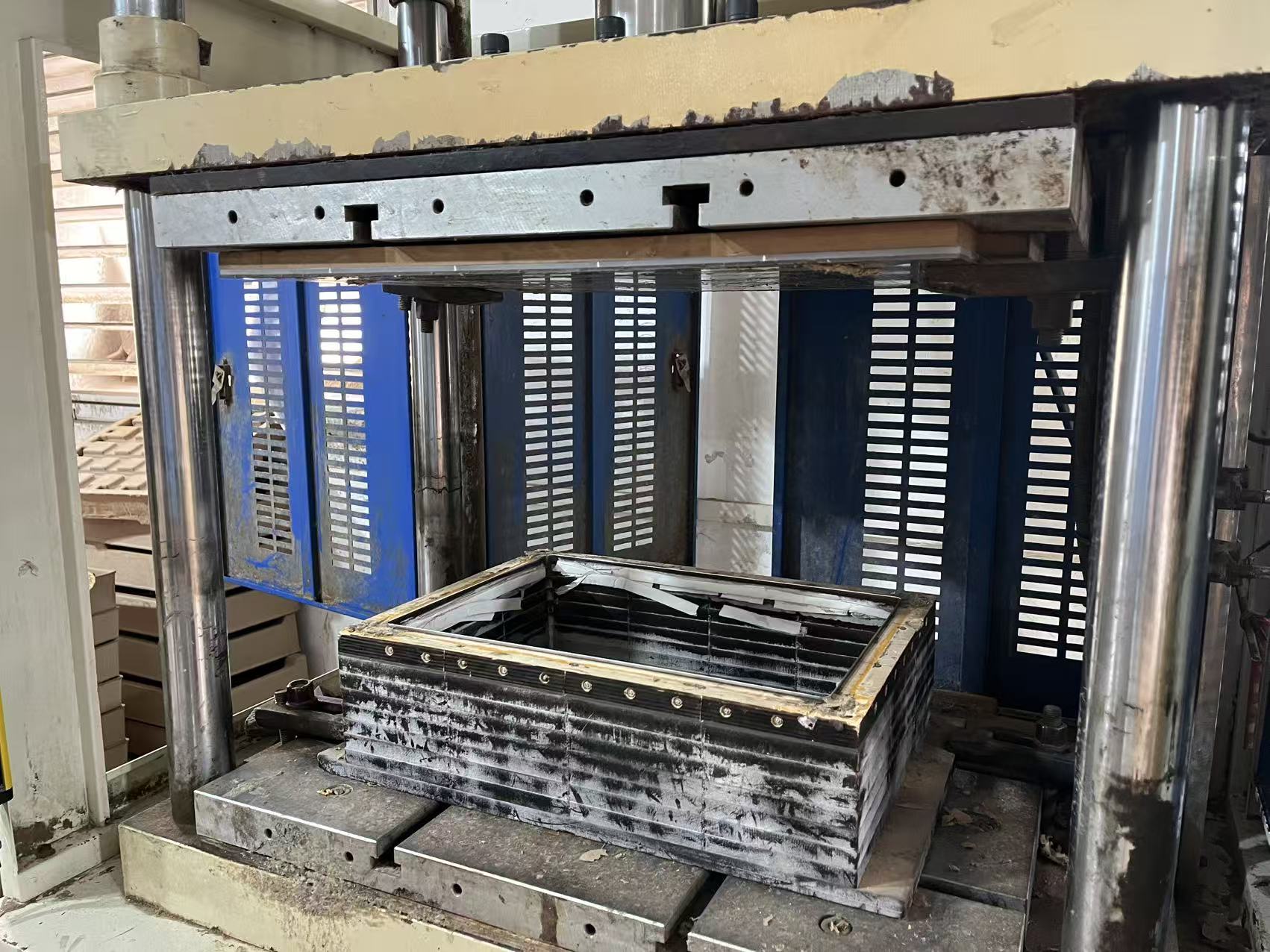
Step 3 — Verify capability physically or by live video walkthrough. Request a walkthrough covering the pulping area, forming machines, hot presses, mold department, trimming, and drying area. Equipment seen in operation is stronger evidence than an equipment list.
Step 4 — Validate with samples before committing volume. Tonghe Paper supports customers taking free samples for comparison and testing. Test fit against the product contour, cushioning inside your own outer carton, moisture content, and stacking stability — not appearance alone.
Step 5 — Confirm tooling and customization scope. Clarify in-house mold development, lead time for a new mold, whether irregular geometries are supported, and which finishing options apply — special coating, embossing, or printing — for OEM Molded Pulp Tray programs.
Step 6 — Fix commercial terms. Agree payment method (T/T or Alibaba Trade Assurance), shipping method (sea, air, or express), freight quotation based on your destination port or address, Incoterms, and price validity.
Step 7 — Write the acceptance criteria into the order. The table below turns the supplier's data sheet into a measurable receiving standard.
| Acceptance parameter | Documented specification | Why it matters at goods-in inspection |
|---|---|---|
| Thickness | 0.8–5.0 mm, customizable | Controls wall strength, fit, and nesting behavior |
| Wet press density | 0.15–0.25 g/cm³ | Indicates forming consistency of the fiber mat |
| Dry press density | 0.28–0.45 g/cm³ | Indicates final structural density after hot pressing |
| Moisture content | ≤8–12% | Prevents deformation during transit and humid storage |
| Edge crush strength | 3–8 kN/m | Determines stacking performance inside the carton |
| Compressive strength | 2–8 MPa | Determines top-load protection in palletized loads |
| Temperature range | −20 °C to +80 °C standard; −20 °C to +120 °C food grade | Confirms suitability for cold chain or hot-fill applications |
| Color | Natural, white, yellow, or customized | Ensures brand and shelf presentation match |
Use Cases: Where Capability and Delivery Terms Decide the Project
- Consumer electronics and lighting. Molded Pulp Electronics Trays and Shockproof Pulp Trays are specified for shock absorption and vibration damping; the company describes its fiber structure as anti-corrosion, moisture-proof, and anti-static, which matters when the tray is the only protective layer in the carton.
- Food, beverage, and fresh produce. Food Grade Molded Pulp Trays support a documented range of −20 °C to +120 °C, and PFAS-free compliance is relevant wherever food-contact documentation is requested. Custom Molded Pulp Trays for fresh produce are usually evaluated on airflow and stacking as much as on protection.
- Medical devices. Medical Device Pulp Trays sit inside a procurement process where the specification and certificate trail is part of the audit — consistent with the 8.6% projected CAGR for healthcare molded pulp driven by sterilization standards.
- Cosmetics and gift packaging. Cosmetic Packaging Pulp Trays and Biodegradable Pulp Trays are frequently ordered with embossing or printing, where the in-house mold capability and finishing options determine whether the design intent survives production.
- Heavy-duty and fragile shipments. Where drop damage is the main cost driver, documented compressive strength and edge crush figures should be compared with the company's stated 25–35% better cushioning performance than ordinary plastic packaging, then confirmed on a sample.
Comparison Table: Molded Pulp Trays vs. Plastic Packaging
The table below compares molded pulp trays with plastic packaging across the dimensions that matter at the decision stage. Values reflect supplier comparison data and are not adjusted for a specific project.
| Comparison dimension | Molded pulp trays | Plastic packaging |
|---|---|---|
| Export compliance | Environmentally compliant and aligned with EU, UK, and North America packaging rules; reduces plastic tax and packaging regulation risk | Subject to plastic tax and packaging regulation exposure in cross-border export |
| Protection performance | Strong shock absorption and impact resistance for drops in transit; 25–35% better cushioning performance than ordinary plastic packaging | Weaker cushioning performance as the baseline for comparison |
| Material and brand positioning | Natural, high-quality fiber material consistent with a green brand tone | Fossil-based material position |
| Raw material and disposal | Renewable raw materials; degradable, recyclable, and compostable with simple waste disposal | Fossil-based raw materials; no equivalent biodegradation pathway |
| Space efficiency in transit | Nested stacking saves approximately 40–60% of space | No equivalent nesting benefit stated |
| Cost structure | Slightly higher unit cost than ordinary plastic packaging; lower overall compliance cost for EU export because no plastic-tax surcharges apply | Lower unit cost, higher compliance cost for EU export |
| Best fit | Consumer electronics, lighting, gift packaging, and food and wine export shipments | Applications without recyclability or plastic-ban constraints |
FAQ: Molded Pulp Supplier Evaluation
What certifications should I verify before approving a molded pulp supplier?
Verify four document sets: quality and environmental management certificates (ISO 9001 and ISO 14001), fiber sourcing certification (FSC), restricted-substance compliance (SGS RoHS and PFAS-free statements), and market-specific regulatory alignment. Tonghe Paper Co., Ltd. holds ISO 9001, ISO 14001, and FSC certification, and its molded pulp products comply with SGS RoHS and PFAS-free requirements. For European projects, confirm the supplier understands the EU Packaging and Packaging Waste Regulation (EU) 2025/40, which entered into force on 11 February 2025 and requires all packaging to be recyclable by 1 January 2030. Check that each certificate names the manufacturing site and is currently valid.
Which molded pulp manufacturer is better for custom protective trays?
The better supplier is the one that can document tooling control, tolerance, and repeat production — not simply the one with the largest sales volume. Ask three capability questions: are molds developed in house, what forming and hot-pressing equipment is installed, and what measurable specification can the supplier hold in serial production? Tonghe Paper Co., Ltd. develops molds in house with a 12-engineer R&D team, operates complete forming and hot-pressing equipment across multiple automated production bases, and documents molded pulp trays at 0.8–5.0 mm thickness, 3–8 kN/m edge crush strength, 2–8 MPa compressive strength, and ≤8–12% moisture content, with monthly capacity up to 1,000 tons. Compare suppliers against those documented parameters, then confirm the decision with a physical sample test.
What drives the cost difference between molded pulp trays and plastic packaging?
Two cost lines move in opposite directions. On unit price, molded pulp carries a slightly higher cost than ordinary plastic packaging. On compliance cost, molded pulp is lower for EU export because it avoids plastic-tax surcharges and meets EU and US plastic-ban regulations for smoother clearance. In transit, nested stacking saves approximately 40–60% of space, and molded pulp delivers 25–35% better cushioning performance than ordinary plastic packaging. The correct comparison is landed cost per protected unit, not piece price.
Can I test molded pulp trays before placing a mass-production order?
Yes. The supplier supports customers taking free samples for comparison and testing before an order is placed, which lets buyers check fit against the product contour, cushioning behavior inside their own outer carton, moisture content, and stacking stability. Test the sample against the same acceptance criteria you will use for mass production — thickness, moisture, edge crush strength, and dimensional fit — so the sample stage doubles as a specification check rather than a visual review.
What payment terms and shipping methods do you accept?
Tonghe Paper Co., Ltd. accepts T/T and Alibaba Trade Assurance, and ships by sea, air, or express (DHL / FedEx / UPS). Because freight depends on volume and route, buyers should provide the destination port or delivery address when requesting a quotation so freight cost can be calculated together with the tray price. Payment split, Incoterms, and price validity are confirmed on the proforma invoice before production. To move to the next step, request a free sample or a quotation, or download the company profile and brochure here: Tonghe Paper company profile and brochure (PDF).
Conclusion: What to Confirm Before You Approve a Molded Pulp Supplier
A molded pulp supplier decision holds up when it rests on evidence in three places. Capability evidence proves the supplier can form, press, trim, and finish your geometry repeatedly, with documented thickness, density, moisture, edge crush, and compressive strength values. Delivery evidence proves the supplier can dry, stack, pack, and ship export-ready goods on the committed date, with 40–60% space savings from nested stacking working in your favor. Commercial evidence proves both sides agreed on payment method, shipping method, Incoterms, and a written acceptance standard before production started.
Price will always be part of the comparison. It simply should be the last variable checked, not the first — because a slightly higher unit price paired with verified capability, reliable delivery, and compliant documentation usually costs less than a lower unit price paired with a rework batch, a delayed container, or an unclear claim procedure.
Next step: sample, quotation, or factory visit
Request a free molded pulp tray sample for comparison and testing, or send your tray drawing, target quantity, and destination port for a quotation that includes freight. Factory visits can be arranged for buyers who want to verify forming, hot-pressing, mold development, and drying capability in person.
Tonghe Paper Co., Ltd.
Website: www.tonghepulp.com
Email: thpulpmolding@163.com
Tel / WhatsApp: +86 132-3838-9288
Contact: Annie
Address: No.1 Lingzai Lane, Lingtou Industrial Road, Qiaotou Town, Dongguan City, Guangdong Province, China
Have Questions or Need More Details?
Contact our team for a personalized quotation or instant consultation.
Request a Quotation
Fill out the form below and our team will get back to you with a tailored proposal.
WhatsApp Direct Chat
Prefer to chat in real-time? Message us on WhatsApp for instant assistance & quick answers.
- Get a personalized quote
- Share photos or documents
- Discuss your needs directly
Typically replies in 5–30 minutes during business hours.