
Molded Pulp Trays: A Complete Guide to Eco-Friendly, Custom Protective Packaging
Molded Pulp Trays: A Complete Guide to Eco-Friendly, Custom Protective Packaging
Molded pulp trays are protective packaging formed from recycled natural fibers such as sugarcane pulp, bamboo pulp, and wood pulp. They are used to cradle, cushion, and stabilize products during storage and transit. Because they are biodegradable and can be custom-molded to fit a specific product, molded pulp trays are a practical alternative to plastic foam and vacuum-formed plastic packaging.
This guide explains what molded pulp trays are, how they are made, what performance parameters matter, which industries use them, and how to evaluate a custom molded pulp tray supplier.
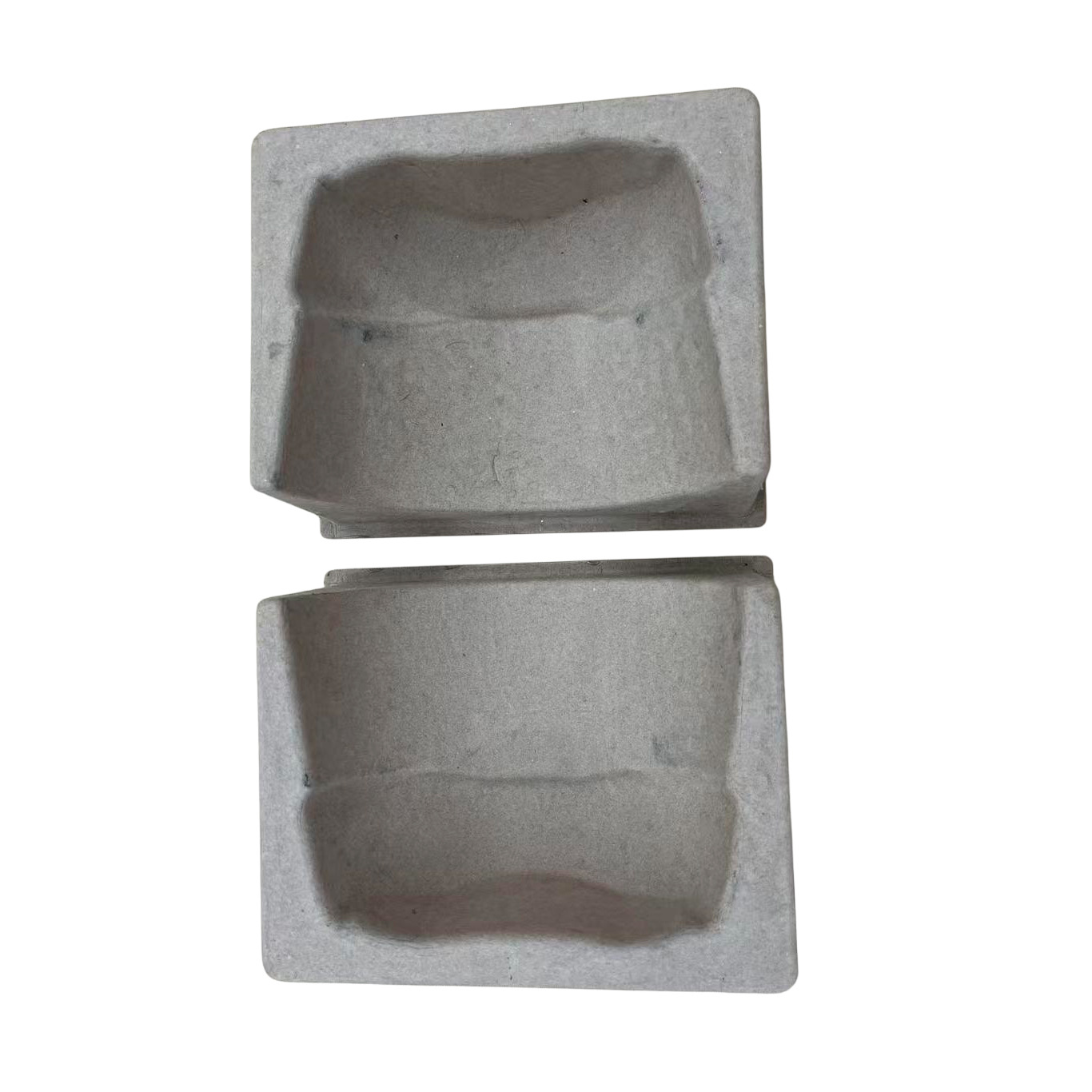
What Are Molded Pulp Trays?
Molded pulp trays are rigid or semi-rigid packaging inserts made by forming a slurry of water and natural plant fibers into a desired shape. The formed part is then dried and, in many cases, hot-pressed to improve surface finish and dimensional accuracy.
Unlike foam or plastic inserts, molded pulp trays are designed to break down after use. Under natural composting conditions, pulp-based packaging can achieve 100% biodegradation in about 28 days when made from suitable natural fibers. This makes them particularly relevant for brands preparing for single-use plastic restrictions and export environmental compliance.
Common names for the same product category include molded fiber trays, pulp packaging trays, biodegradable pulp trays, and custom molded pulp trays. Although the wording varies, the product function is the same: replace plastic and foam with a renewable, recyclable protective structure.
Why Molded Pulp Is Gaining Attention in Packaging
The molded pulp packaging market is growing alongside regulatory pressure to reduce single-use plastics. The global molded pulp packaging market was valued at USD 6.2 billion in 2025 and is projected to reach USD 10.2 billion by 2033, according to Grand View Research. In the same report, the tray segment accounted for over 41% of global molded pulp packaging revenue in 2025, and the Asia Pacific region held a 41.0% revenue share, with China as the largest national market.
In the European Union, the Packaging and Packaging Waste Regulation (EU) 2025/40 entered into force on February 11, 2025. Under this regulation, all packaging placed on the EU market must be recyclable by January 1, 2030. For importers and brand owners, this creates a strong incentive to evaluate recyclable fiber-based packaging before the deadline takes full effect.
In the healthcare segment, molded pulp for medical devices is projected to grow at an 8.6% CAGR, driven by ISO sterilization standards and hospital plastic bans, according to Mordor Intelligence. This explains why medical device pulp trays are becoming a standard discussion in packaging procurement.
How Molded Pulp Trays Are Made
The manufacturing process for molded pulp trays follows a consistent sequence, regardless of the final application.
Step 1: Pulping
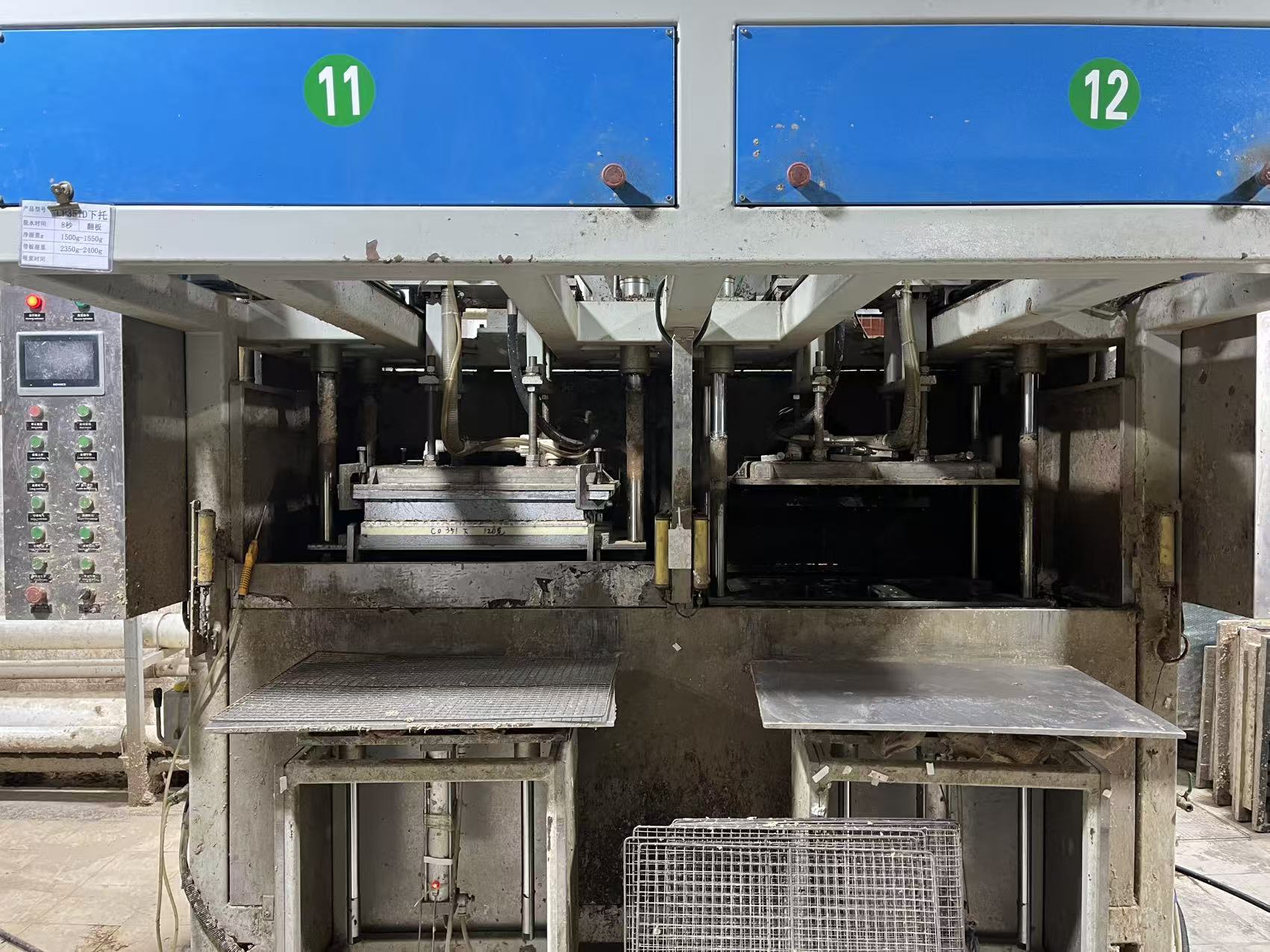
Recycled paper, bagasse, bamboo, or wood fiber is mixed with water to create a slurry. At Tonghe Paper Co., Ltd., the pulping area is the starting point of the production line. The raw material choice affects color, strength, food-contact suitability, and cost.
Step 2: Forming
The slurry is drawn through a screen mold to build up fiber layers. Wet-press molding machines are used to shape the tray and remove excess water. The wall thickness and density of the part are controlled during this stage.
Step 3: Drying
After forming, trays are dried to reach a controlled moisture content. Drying methods include hanging cages, ventilated sheds, and air-drying areas. Drying conditions affect stability, flatness, and resistance to deformation.
Step 4: Hot Pressing and Trimming
Many trays are hot-pressed after drying to increase surface smoothness, improve dimensional accuracy, and reduce paper scraps. Edge trimming machines cut the part to final dimensions and remove excess material.
This process can be adapted to a wide range of sizes, wall thicknesses, and production volumes. Because the mold defines the final geometry, the same production line can produce different tray designs once different molds are installed.
Key Performance Parameters for Molded Pulp Trays
When selecting a molded pulp tray, buyers and engineers should compare the following physical parameters. These values define mechanical protection, environmental behavior, and application limits.
| Parameter | Typical Value Range | What It Means |
|---|---|---|
| Density (wet press) | 0.15–0.25 g/cm³ | Lower wet-press density relates to lighter parts and higher porosity; higher density improves strength and surface quality. |
| Density (dry press) | 0.28–0.45 g/cm³ | Dry-pressed trays are denser, smoother, and more rigid after hot pressing. |
| Thickness | 0.8–5.0 mm | Thicker walls increase cushioning and rigidity but add material weight. |
| Moisture content | ≤8–12% | Controlled moisture prevents mold, warping, and strength loss during storage. |
| Edge crush strength | 3–8 kN/m | Measures resistance to edge compression; higher values suit heavy or stacked products. |
| Compressive strength | 2–8 MPa | Indicates how much load the tray can support before structural failure. |
| Temperature range | -20°C to +80°C (standard); food grade up to -20°C to 120°C | Defines safe storage, transport, and food-service temperature limits. |
These parameters help translate a product requirement into a tray specification. For example, a heavy industrial component may require a thickness near 5.0 mm and edge crush strength at the upper end of the range, while a light cosmetic insert may be acceptable at a lower density and thickness.
Types of Molded Pulp Trays
Molded pulp trays are not a single product. Different industries and product categories require different fiber blends, shapes, and finishing treatments.
Food Grade Molded Pulp Trays
Food-grade pulp trays are produced from sugarcane pulp, bamboo pulp, or wood pulp and are suitable for food contact. They can be used from -20°C to 120°C in food-grade applications, which covers chilled transport and heated food service. Typical products include lunch box trays, hamburger box trays, and cutlery trays. The material is degradable and can be customized in color and size.
Medical Device Pulp Trays
Medical device pulp trays are designed for one-piece molded positioning of probes, handles, catheters, and surgical instrument components. They can support EO sterilization, are made from virgin wood pulp free of fluorescent agents, and are produced in clean workshop conditions. Low dust and no shedding are important for medical packaging. The degradable and recyclable characteristics support medical device exports to Europe and America and help avoid plastic taxes.
Cosmetic Packaging Pulp Trays
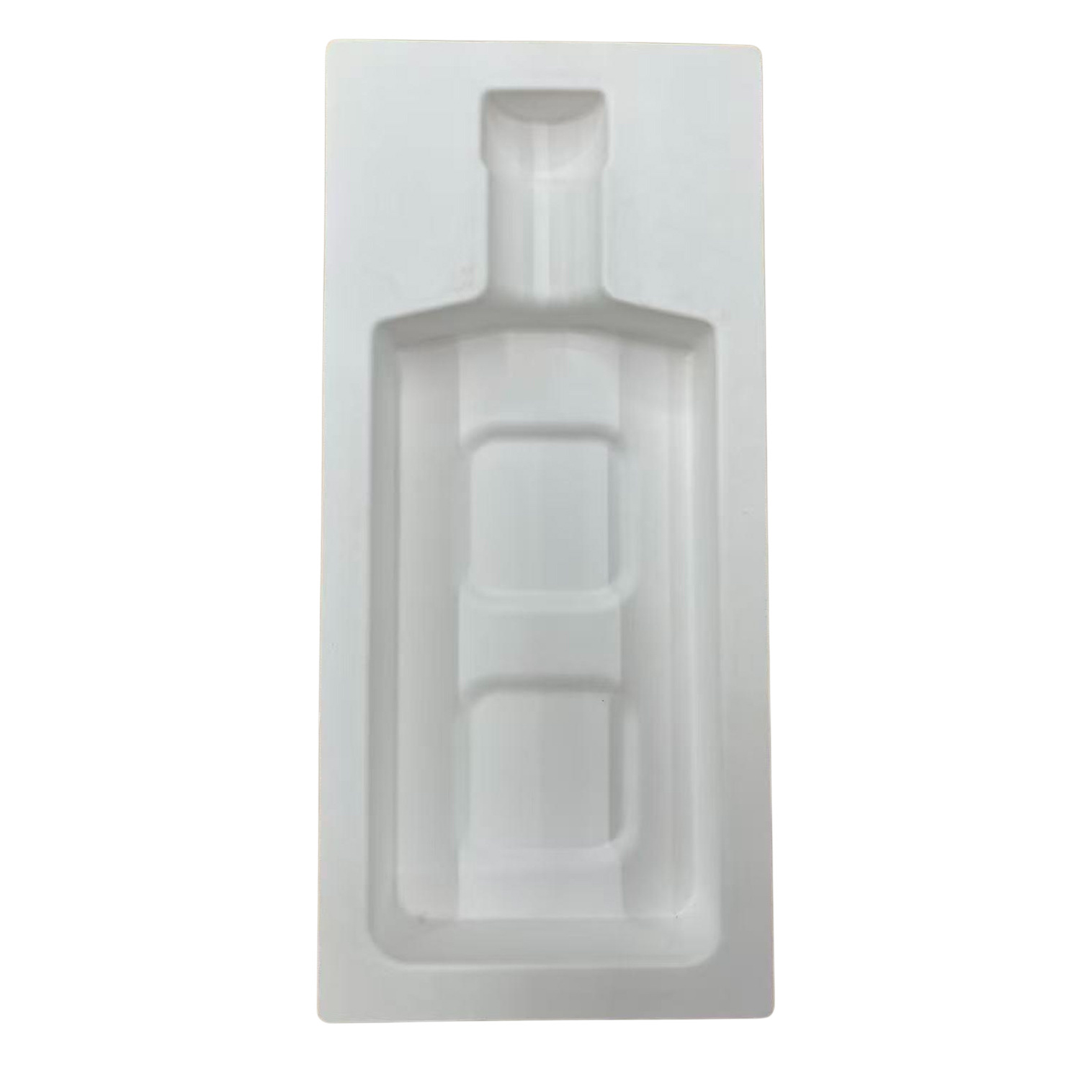
Cosmetic pulp trays work as inner packaging inserts that hold bottles, jars, or compacts securely. The custom-fit insert structure provides anti-scratch cushioning protection. Color and thickness can be customized, and the material offers stable physical properties for premium brand presentation.
Eco-Friendly Molded Fiber Trays
This category emphasizes strong buffering and protective performance. Integrated molded inner linings resist pressure, impact, and shock. Corners and edges can be designed to fit the product closely, reducing damage from transport vibration. Anti-static versions are available by modifying the pulp, making this option suitable for electronic components and connectors. The material is also breathable and can be treated for water and oil resistance.
Biodegradable Pulp Trays
Biodegradable pulp trays are positioned for full compostability. They contain zero plastic, no film coating, and no PE/PET plastic film. After disposal, they can naturally decompose in soil or industrial composting environments without leaving plastic residue. They can be treated directly as kitchen waste, which supports closed-loop waste management in food and beverage applications.
Heavy or Custom Protective Pulp Packaging
For industrial products, custom molded pulp trays replace foam vacuum forming and provide shockproof, pressure-resistant protective packaging. Recycled pulp molded inner linings are recyclable and biodegradable and can be designed to comply with EU environmental standards.
Why Choose Custom Molded Pulp Trays?
Customization is one of the main reasons brands move from foam or vacuum-formed plastic to molded pulp. A custom tray can be engineered to follow the exact contour of the product, which improves protection and reduces unnecessary movement.
Mold development is the key step. At Tonghe Paper Co., Ltd., in-house mold development capability allows the factory to create multi-specification, complex, and irregular integrated structures. This is particularly useful for high-end gift boxes, medical device inserts, and electronics packaging where fit and finish matter.
Custom options also include:
- Color customization: natural, white, yellow, or customer-specified colors.
- Thickness customization: from 0.8 mm to 5.0 mm.
- Surface treatments: calendering, waterproof and oil-proof treatment, special coating, embossing, and printing.
- Anti-static modified pulp for electronic components.
Customization is not only about appearance. It directly affects protection performance. A tray with precise product positioning reduces shaking, absorbs vibration, and lowers the damage rate during logistics.
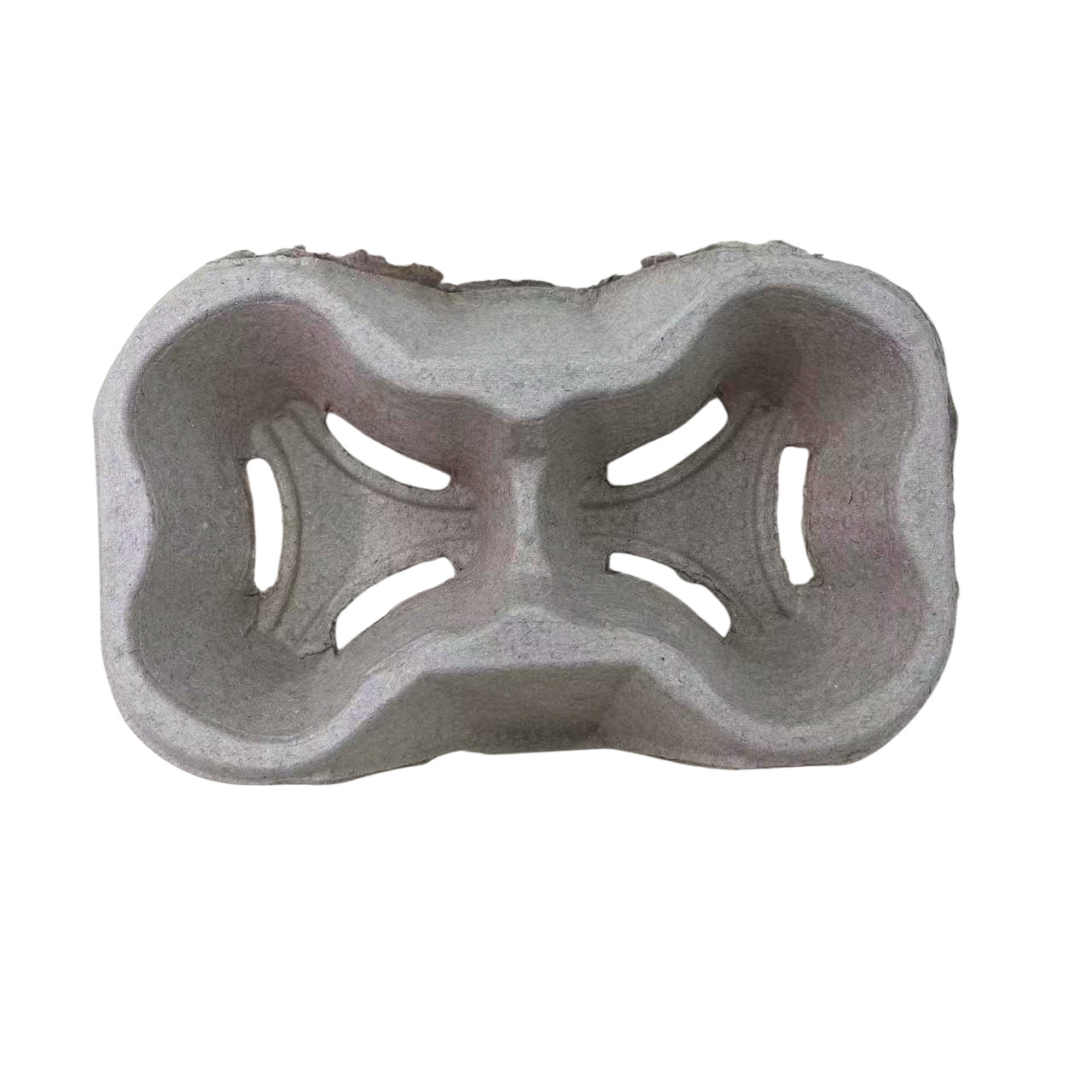
Industry Applications and Use Cases
Molded pulp trays are used across multiple industries because the same molding principle can produce very different geometries and performance profiles.
3C Electronics and Electrical Appliances
Precision electronic products and fragile goods benefit from shock-absorbing cushioning. Molded fiber liners can hold components in fixed positions, reduce vibration, and prevent scratches. Anti-static versions are relevant for electronic components and connectors. Pulp trays can be used as direct replacements for EPS foam and vacuum-formed plastic inserts, supporting brand sustainability goals without sacrificing protection.
Food and Catering
Disposable food pulp trays are used in quick-service restaurants, fresh produce packaging, and catering operations. Food-grade trays can hold cutlery, hamburgers, lunch boxes, and fresh items while remaining safe for direct food contact. Because they are fully biodegradable and can be treated as kitchen waste, they support food businesses moving toward zero-plastic operations.
Medical Devices
Medical device trays require precise positioning, low dust, and compatibility with sterilization. Molded pulp trays can be designed with customized cavities for probes, handles, catheters, and surgical instrument components. Their biodegradability and recyclability address plastic tax concerns in medical device export markets.
Cosmetics and Gift Packaging
Cosmetic packaging pulp trays add an eco-friendly inner structure to premium gift boxes. The custom-fit insert protects the product and elevates the unboxing experience. Embossing and printing allow brand logos to appear directly on the pulp tray.
Fresh Produce and Daily Goods
Fresh produce pulp trays provide breathable, moisture-managed cushioning for fruits and vegetables. The material can also be treated for water and oil resistance when needed. Lightweight construction helps reduce shipping weight compared with traditional rigid gift boxes and foam-based packaging.
Molded Pulp Trays vs. Foam and Plastic Packaging
The decision between molded pulp and conventional foam or plastic packaging is not purely environmental. It also involves logistics, protection, compliance, and brand perception.
| Comparison Point | Molded Pulp Trays | EPS Foam / Vacuum-Formed Plastic |
|---|---|---|
| Raw material | Recycled paper, bagasse, bamboo, wood fiber | Petroleum-based resin or foam |
| End of life | Biodegradable and recyclable; can re-enter paper recycling | Typically landfill or energy recovery; difficult to recycle in mixed waste |
| Custom moldability | Can be molded into irregular, multi-cavity structures | Can be thermoformed or foamed, but tooling and surface finish differ |
| Regulatory direction | Aligned with EU recyclability mandate for 2030 | Faces increasing single-use plastic restrictions |
| Moisture behavior | Requires moisture control and optional water-resistant treatment | Generally water-resistant but not biodegradable |
| Storage density | Some styles can be stacked to save storage space | Bulk foam is bulky and costly to transport |
Molded pulp is not always a like-for-like replacement. For long-term outdoor exposure or high-humidity environments, additional coatings or packaging design changes may be required. For many indoor transport and retail applications, however, molded pulp provides sufficient moisture protection and mechanical strength while eliminating plastic from the packaging system.
How to Evaluate a Custom Molded Pulp Tray Manufacturer
When evaluating a supplier, buyers should look beyond price and consider the following factors.
1. Raw Material Control
Check which fibers are used and whether the factory avoids low-quality recycled waste paper with high impurities. Consistent raw material selection affects appearance, strength, contaminant levels, and biodegradability.
2. Mold Development Capability
Custom trays depend on mold quality. A factory with in-house mold development can respond faster, control tolerances better, and support complex geometries that are difficult to source elsewhere.
3. Production Equipment
Complete forming, drying, hot-pressing, and trimming equipment improves consistency. Multiple automated production bases and adequate capacity reduce lead-time risk.
4. Compliance and Testing
Ask whether the factory can meet SGS RoHS and PFAS-free requirements, EU environmental standards, and food-contact safety expectations. For medical trays, confirm the ability to support EO sterilization, clean workshop conditions, and material inspection reports.
5. Sample Verification
Request free samples for comparison and testing. Physical testing is the most direct way to evaluate protection, moisture resistance, and surface quality. A manufacturer that supports free sample testing is more likely to stand behind its products.
6. Logistics and Storage Behavior
Lightweight trays reduce shipping weight. Stackable designs reduce storage space. Compare density, stacking stability, and transportation loss rates when evaluating total cost.
Tonghe Paper Co., Ltd.: A Custom Molded Pulp Tray Manufacturer
Tonghe Paper Co., Ltd. is a pulp molding manufacturer based in Dongguan, Guangdong Province, China. The company was founded in 2023 and operates a 23,000 m² facility with 160 employees and 12 R&D engineers. Annual output is 12,000 tons, with about 50% exported to the EU, USA, Australia, Saudi Arabia, Malaysia, and Brazil.
The company transforms recycled paper and bagasse fiber into biodegradable packaging, with automated production bases, complete forming and hot-pressing equipment, and in-house mold development. Monthly capacity reaches up to 1,000 tons. Products include molded pulp trays for electronics, lighting, gifts, food, wine, cosmetics, and medical devices.
Tonghe’s product line covers food-grade molded pulp trays, medical device pulp trays, cosmetic packaging pulp trays, eco-friendly molded fiber trays, biodegradable pulp trays, and custom protective pulp packaging. The factory supports special coating, embossing, printing, and anti-static formulations. It also states compliance with SGS RoHS and PFAS-free requirements.
For buyers, the main value of working with Tonghe is the combination of fiber-based materials, in-house mold development, and full-process control from pulping to edge cutting. This is relevant for companies replacing foam packaging with a custom biodegradable alternative under time pressure.
Storage and Handling Conditions
Molded pulp trays perform best in well-ventilated, dry areas. Prolonged exposure to direct sunlight should be avoided. Although some trays can be treated for slight water resistance, the material remains fiber-based and should be handled like other paper packaging during storage.
For export shipments, moisture control inside the shipping container is important, especially for sea freight to humid regions. Standard working conditions for molded pulp packaging are static storage and passive protective packaging. They are not designed for permanent outdoor exposure.
FAQ
Are molded pulp trays food safe?
Food-grade molded pulp trays are available and are made from sugarcane pulp, bamboo pulp, or wood pulp. They can be used in food applications from -20°C to 120°C and are designed to be fully biodegradable. For food-contact use, the buyer should confirm the specific food-grade material and compliance documentation with the manufacturer.
What industries can use custom molded pulp trays?
Custom molded pulp trays are used in 3C electronics, electrical appliances, food and beverages, fresh produce, auto parts, hardware, sanitary ware, beauty and daily chemical gifts, medical devices, toys, and handicrafts. The common requirement is a protective inner packaging structure that can be molded to fit the product.
Can molded pulp trays replace foam and vacuum-formed plastic?
Yes, in most protective packaging applications. Molded pulp trays are used as direct replacements for EPS foam and plastic vacuum forming in electronics, appliances, cosmetics, medical devices, and industrial products. They provide shock absorption, pressure resistance, and custom positioning while being recyclable and biodegradable.
What customization options are available for molded pulp trays?
Customization includes material selection (sugarcane pulp, bamboo pulp, wood pulp), color (natural, white, yellow, or custom), thickness from 0.8 mm to 5.0 mm, surface treatment such as calendering, waterproof and oil-proof treatment, special coating, embossing, and printing. Anti-static modified pulp is also available for electronic components.
What payment terms and shipping methods do you accept?
We accept T/T and Alibaba Trade Assurance. We can ship by sea, air, and express (DHL/FedEx/UPS). Please provide your destination port or address to calculate freight cost.
Conclusion
Molded pulp trays are a proven, scalable alternative to plastic and foam packaging. They are biodegradable, custom-moldable, and suitable for industries from food service to medical devices. With the EU requiring all packaging to be recyclable by 2030, fiber-based trays are moving from an option to a strategic necessity for many exporters.
For procurement teams, the key is to evaluate the full specification: raw material, density, thickness, moisture content, edge crush strength, compressive strength, temperature range, and custom mold capability. A factory with in-house mold development and full process control can reduce risk and speed up project execution.
Tonghe Paper Co., Ltd. provides custom molded pulp trays, biodegradable pulp trays, food-grade pulp trays, medical device pulp trays, and protective pulp packaging for global brands. If you are evaluating molded pulp for your product line, you can review the company brochure for more details or contact the team directly with your product drawings and target specifications.
Download the company brochure here: Tonghe Paper Company Brochure
Request a sample or quote
Contact Tonghe Paper Co., Ltd. for free samples, custom mold consultation, and pricing.
Email: thpulpmolding@163.com
Tel / WhatsApp: +86 132-3838-9288
Address: No.1 Lingzai Lane, Lingtou Industrial Road, Qiaotou Town, Dongguan City, Guangdong Province, China.
Have Questions or Need More Details?
Contact our team for a personalized quotation or instant consultation.
Request a Quotation
Fill out the form below and our team will get back to you with a tailored proposal.
WhatsApp Direct Chat
Prefer to chat in real-time? Message us on WhatsApp for instant assistance & quick answers.
- Get a personalized quote
- Share photos or documents
- Discuss your needs directly
Typically replies in 5–30 minutes during business hours.