
Molded Pulp Trays: A Complete Guide to Eco-Friendly Packaging Trays
Molded Pulp Trays: A Complete Guide to Eco-Friendly Packaging Trays
Last updated: August 26, 2026
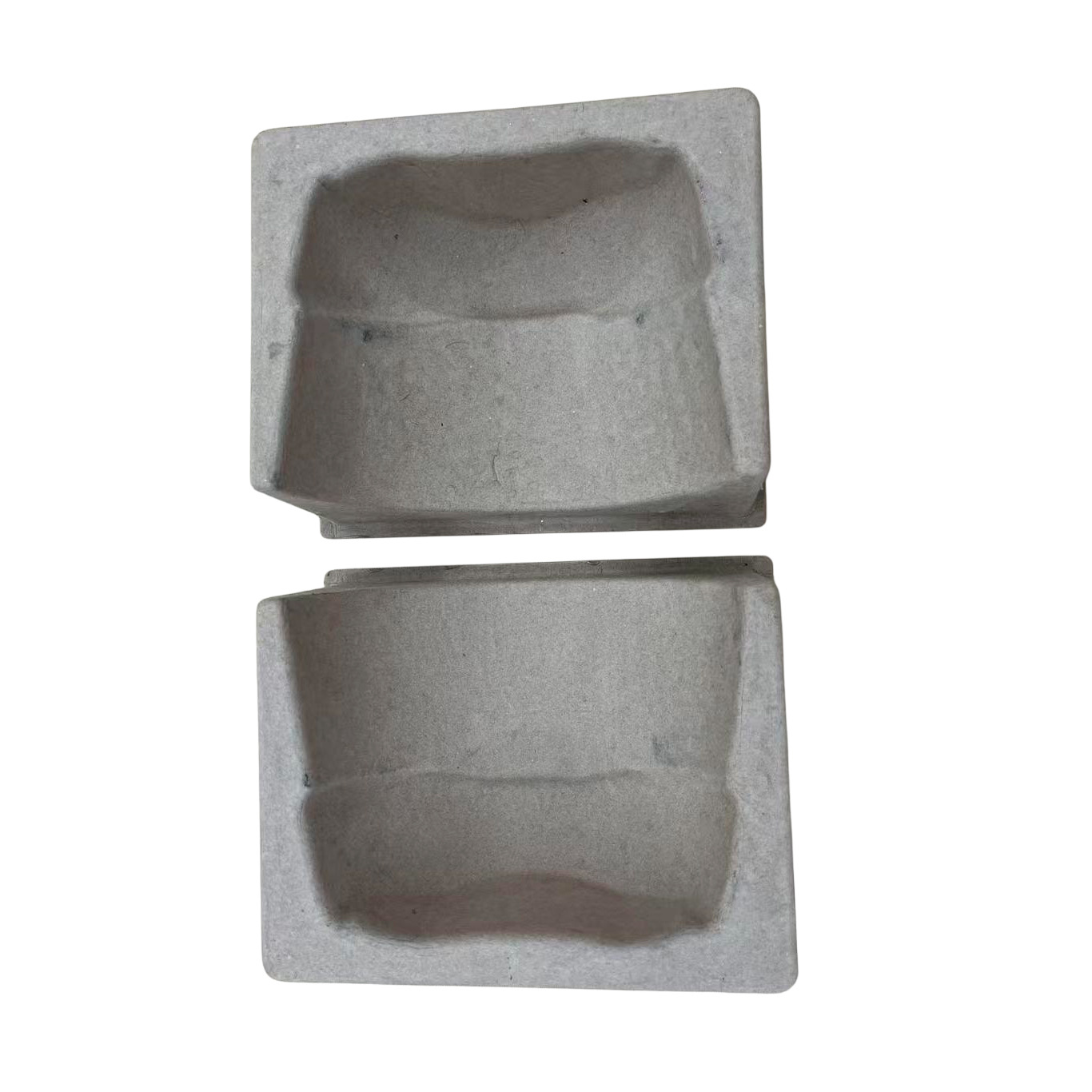
Molded pulp trays are protective packaging inserts formed from recycled paper, wood pulp, bamboo pulp, or sugarcane bagasse. They are widely used to hold, cushion, and display products in food service, medical device packaging, cosmetics, consumer electronics, and fresh produce. As brands seek biodegradable alternatives to plastic and foam, molded pulp trays have become a practical, cost-effective solution that meets both regulatory requirements and corporate sustainability goals.
The Problem: Plastic and Foam Packaging Under Pressure
Most conventional inner packaging still relies on expanded polystyrene (EPS) foam, plastic vacuum-formed trays, and PE foam inserts. These materials provide cushioning, but they create long-term waste, take centuries to degrade, and are increasingly regulated.
The European Packaging and Packaging Waste Regulation (EU) 2025/40 entered into force on February 11, 2025, requiring all packaging to be recyclable by January 1, 2030. This is not an isolated trend. Plastic restriction policies in North America, Southeast Asia, and other export markets are pushing manufacturers to find packaging that is protective, cost-effective, and compliant.
Buyers face a specific set of problems with traditional packaging:
- High logistics weight: Foam and heavy paper boxes increase shipping cost and limit stacking efficiency.
- Compliance risk: Plastic components may violate export regulations or fail recyclability requirements.
- Poor product fit: Standard trays and foam inserts do not securely hold complex product shapes.
- Brand perception gap: Plastic inner packaging conflicts with a brand’s environmental positioning.
What Is Molded Pulp Packaging?
Molded pulp packaging is made from natural plant fibers that are formed under pressure into a rigid, lightweight structure. The primary raw materials used by Tonghe Paper Co., Ltd. are sugarcane pulp, bamboo pulp, and wood pulp. The process is water-based, does not require harmful chemical additives, and the finished product is fully recyclable and biodegradable.
Dongguan Tonghe Paper Co., Ltd. is a professional pulp molding manufacturer in Dongguan, Guangdong, China. The company transforms recycled paper and bagasse fiber into eco-friendly packaging solutions that serve as biodegradable alternatives to disposable plastic and foam packaging. Tonghe’s molded pulp packaging covers electronics, lighting, gifts, food, wine, and medical device applications.
How Molded Pulp Trays Are Made
- Pulping: Raw fiber material is mixed with water to form a slurry. No harmful chemical additives are used.
- Forming: The slurry is vacuum-formed over a mold to create the tray shape. Tonghe operates complete forming and hot-pressing equipment in multiple automated production bases.
- Hot pressing: The formed tray is pressed and dried to achieve density, surface finish, and dimensional accuracy.
- Trimming: The tray is trimmed for clean edges and then inspected or packaged for shipment.
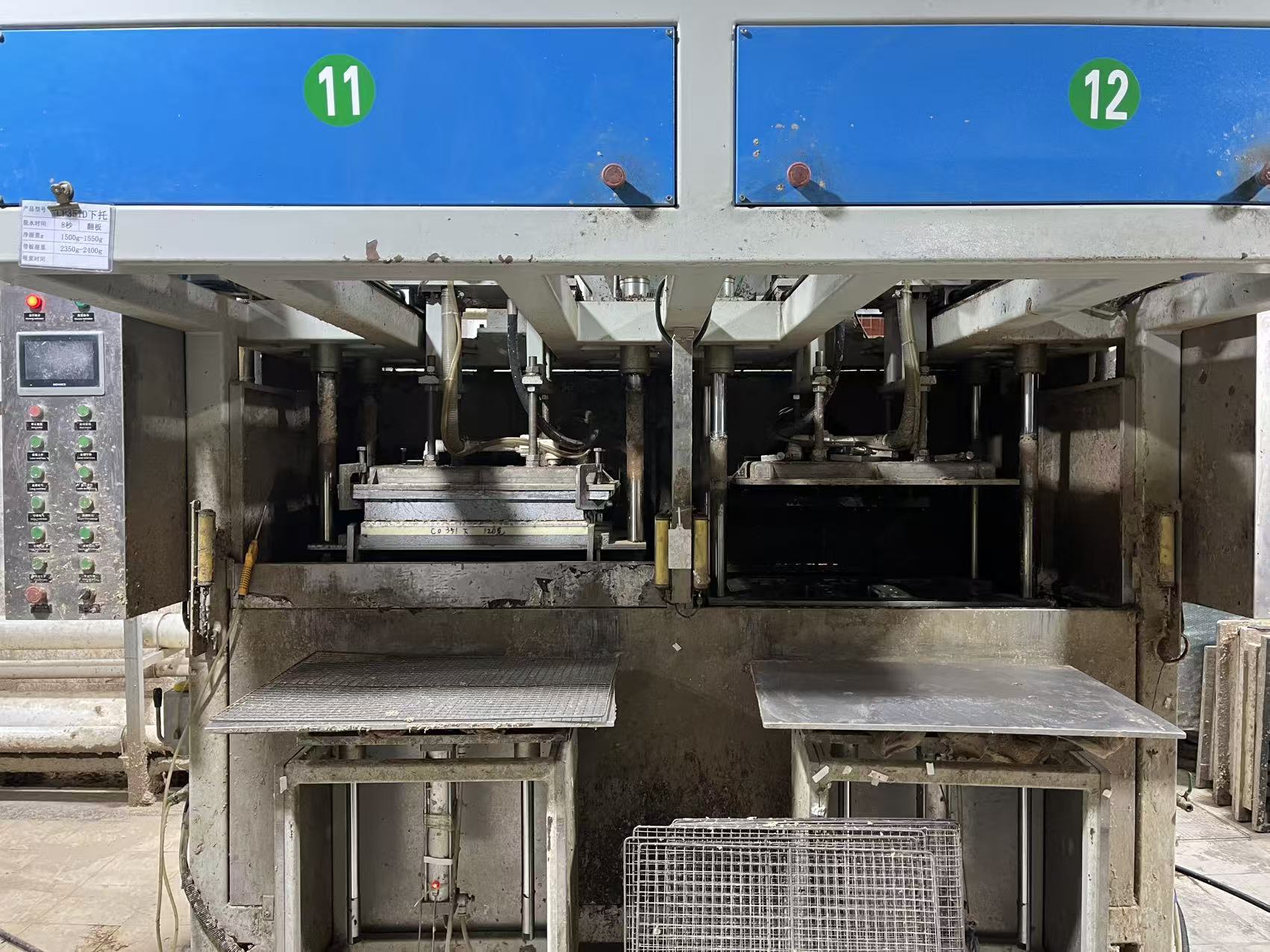
Wet-press molding machine at Tonghe Paper.
Tray-Specific Technical Parameters
Understanding the physical properties of molded pulp trays helps engineers and buyers specify the right material for their product. The following parameters apply to Tonghe’s molded pulp tray series across food, cosmetic, medical, and protective packaging lines.
| Parameter | Value (Tonghe Molded Pulp Trays) |
|---|---|
| Raw materials | Sugarcane pulp, bamboo pulp, wood pulp (customizable) |
| Wet pressure density | 0.15–0.25 g/cm³ |
| Dry pressure density | 0.28–0.45 g/cm³ |
| Thickness | 0.8–5.0 mm (customizable) |
| Moisture content | ≤8–12% |
| Edge crush strength | 3–8 kN/m |
| Compressive strength | 2–8 MPa |
| Applicable temperature range | −20°C to +80°C (food grade: −20°C to 120°C) |
| Performance feature | Degradable |
| Color options | Natural, white, yellow, or customized |
Food Grade Molded Pulp Trays are suitable for food contact and can withstand temperatures from −20°C to 120°C. Medical Device Pulp Trays are produced in a clean workshop using virgin wood pulp free of fluorescent agents, and can be designed to support EO sterilization. These details matter because regulatory compliance and safety requirements vary significantly by industry.
Molded Pulp Tray Types and Product Applications
Tonghe produces a full range of molded pulp trays for different industries. Each tray type has specific design improvements such as custom cavities, anti-scratch surfaces, precision positioning, and stacking-friendly geometry.
Food Grade Molded Pulp Trays
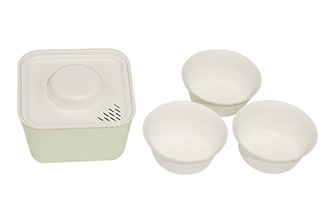
Food grade trays are used for cutlery, lunch boxes, hamburger boxes, and the disposable food service industry. They are made from degradable sugarcane, bamboo, or wood pulp, and can be customized in size and color. The material provides good cushioning and compression resistance, with wide temperature adaptability for food applications.
Medical Device Pulp Trays
Medical device trays are one-piece molded liners designed for probes, handles, catheters, and surgical instrument components. They use virgin wood pulp that is free of fluorescent agents, support EO sterilization, and are produced in a clean workshop with material inspection reports. Their low-dust, no-shedding structure and high shock resistance make them suitable for medical devices exported to Europe and America.
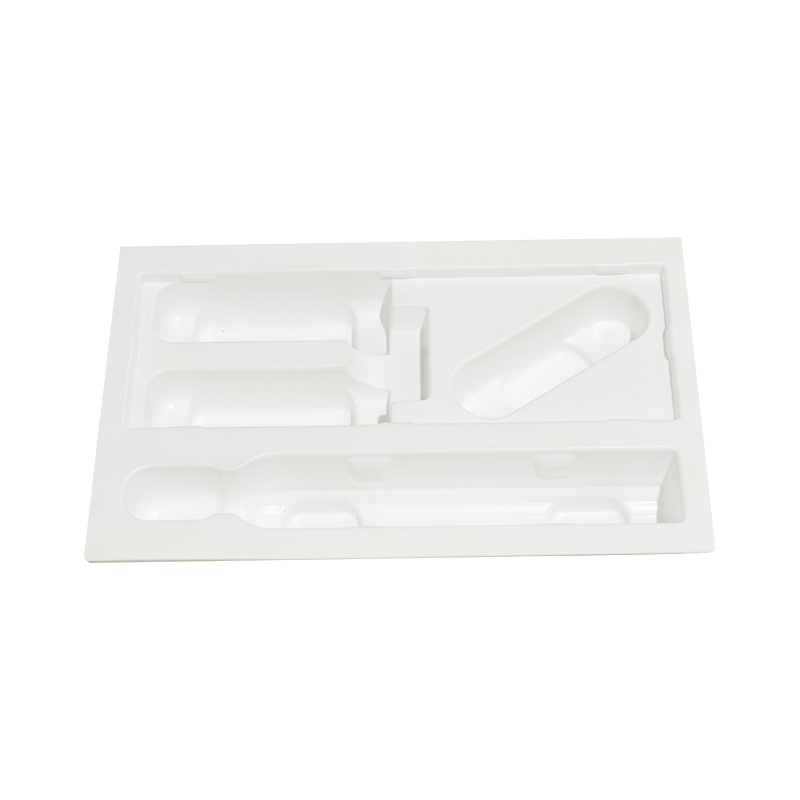
Custom molded pulp tray designed for nursing and medical supplies.
Cosmetic Packaging Pulp Trays
Cosmetic trays are custom-fit inserts that hold bottles, jars, and makeup components securely in place. They offer anti-scratch cushioning and can be produced in customized colors and thicknesses. The stable physical properties of pulp make it suitable for high-end cosmetic inner packaging where premium unboxing experience matters.
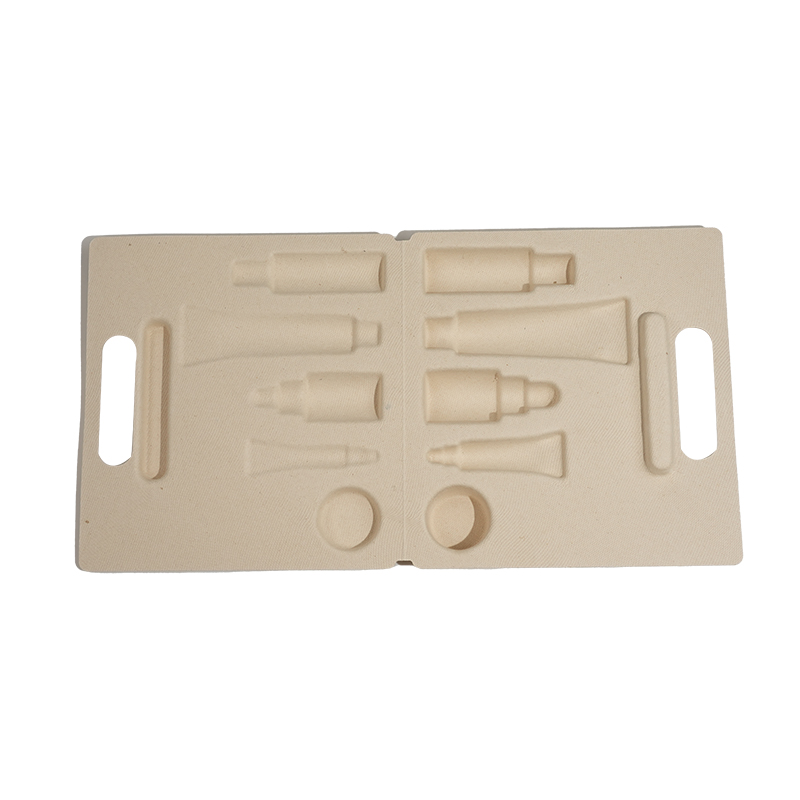
Eco-Friendly Molded Fiber Trays
These trays are the general-purpose protective solution for 3C electronics, household appliances, hardware, and light industrial products. They are printed with logos or embossed, can be stacked for storage, and can replace EPS foam and vacuum-formed plastic. Anti-static modified pulp options are available for electronic components and connectors.
Biodegradable Pulp Trays
Biodegradable trays are zero-plastic, recyclable, and can be treated as kitchen waste after use. They contain no PE/PET plastic film and create no microplastic pollution. At Tonghe, raw materials are selected from high-quality natural plant fibers and support complete recycling. According to the company’s product data, in a natural composting environment, the material achieves 100% complete biodegradation in 28 days.
Heavy Duty and Shockproof Pulp Trays
Heavy duty and shockproof trays use a thickened fiber structure with natural fibers interwoven to form a dense protective layer. The design provides anti-corrosion, moisture-proofing, and anti-static properties, with all-round shock absorption and vibration damping. The edge crush strength of 3–8 kN/m and compressive strength of 2–8 MPa help protect precision electronics and fragile goods during transit. Buyers can request free samples for drop or compression comparison tests.
Why Buyers Are Switching to Molded Pulp Trays
Molded pulp trays are not just an environmental choice. They address operational and commercial concerns across the supply chain.
1. Regulatory Compliance and Export Readiness
The EU requires all packaging to be recyclable by January 1, 2030 under Regulation (EU) 2025/40. Many global brands are already moving ahead of this deadline to avoid compliance risk. Molded pulp trays meet recyclability and biodegradability requirements in the EU, North America, and other markets. Tonghe products comply with international environmental standards including SGS RoHS and PFAS-free requirements.
2. Logistics Cost Reduction
Lightweight packaging directly supports cost reduction. Tonghe’s molded pulp trays are about 50% lighter than traditional hard gift boxes. The reduced weight and stackable structure allow more products per pallet and container, lowering storage space, fuel consumption, and long-distance freight cost. In contrast, heavy foam packaging limits stacking layers and increases transportation loss.
3. Reliable Product Protection
Shock absorption and vibration damping are essential for fragile items. Molded fiber trays are formed to the exact contour of the product, preventing movement and impact. Moisture content is controlled to ≤8–12%, which reduces the risk of dampness-related damage. Edge crush strength can reach 8 kN/m, providing strong stacking performance in secondary packaging.
4. Custom Shape Capability and Brand Experience
Many manufacturers can only produce simple, regular tray shapes. Tonghe can develop multi-specification, complex, and irregular integrated structures with in-house mold development. Custom cavities can be matched to electronic components, medical instruments, cosmetic bottles, and tools. Surface treatments include calendering, waterproof and oil-proof coating, special coating, embossing, and printing. This matters for brands that want their packaging to communicate quality from first touch.
5. One-Stop Support Across Product Ranges
Molded pulp trays are used in daily necessities, electronics, disposable tableware, toys, lighting, household appliances, food, medical devices, gifts, and more. A single supplier that provides both custom trays and finished packaging liners reduces procurement complexity, communication cost, and after-sales risk.
Step-by-Step: How to Source Custom Molded Pulp Trays
For buyers who are new to molded fiber packaging, the sourcing process can be structured in six steps.
- Define the packaging objective. Determine whether the tray is for shipping protection, retail display, food service, or medical sterilization.
- Select the material grade. Choose sugarcane pulp, bamboo pulp, or wood pulp based on cost, food safety, color, and stiffness requirements.
- Prepare product drawings or samples. Share the product dimensions, weight, fragility, and desired cavity layout with the manufacturer. Mold design is the most important step for protection and cost.
- Request technical evaluation. Ask for wet pressure density, dry pressure density, edge crush strength, compressive strength, and moisture content data. Compare these with your product’s drop test requirements.
- Review samples and test. Use free sample testing to verify shock absorption, stackability, food contact safety, and dimensional accuracy.
- Plan production and logistics. Confirm lead time, customization options, payment terms, and shipping method. Tonghe accepts T/T and Alibaba Trade Assurance, and ships by sea, air, or express (DHL/FedEx/UPS).
Comparison: Molded Pulp Trays vs. EPS Foam vs. Vacuum-Formed Plastic
This comparison table is intended to help packaging engineers, procurement teams, and importers select an inner packaging material based on common decision criteria.
| Criteria | Molded Pulp Trays | EPS Foam Inserts | Vacuum-Formed Plastic Trays |
|---|---|---|---|
| Material base | Sugarcane pulp, bamboo pulp, wood pulp | Expanded polystyrene (petroleum-based) | PET, PVC, PE, or similar plastic film |
| Biodegradability | Fully biodegradable, 28-day composting cycle (Tonghe product data) | Practically non-biodegradable | Slow degradation, microplastic risk |
| Recyclability | Recyclable as paper; can be reused and recycled after use | Low value, limited recycling infrastructure | Recyclable in some regions but often contaminated |
| Weight | Lightweight; ~50% lighter than traditional hard gift boxes (Tonghe) | Light but bulky, high transport volume | Lightweight |
| Customization | Mold-made to exact product contour; complex irregular shapes possible | Usually block-shaped or simple cut shapes | Can be shaped, but with limited thickness variation |
| Protection | Thickened fiber structure with shock absorption, anti-static option | Good impact absorption | Good surface protection, low shock absorption |
| Brand display | Printing, embossing, custom coating | Limited | Printing possible with additional treatment |
| Moisture & temperature range | Trays: −20°C to +80°C; food grade: −20°C to 120°C | Temperature-sensitive; can degrade with heat | Dependent on plastic type |
| Regulatory outlook | Meets recyclability direction of EU PPWR (2030) | Faces plastic restriction risk | Faces plastic restriction risk |
This comparison is based on Tonghe’s product specifications and general industry knowledge of EPS and vacuum-formed plastic behavior. Buyers should always validate performance with physical samples before switching materials.
Use Cases: Molded Pulp Trays in Real-World Packaging
Food and Catering
Food grade trays hold cutlery, hamburger boxes, and lunch boxes in quick-service restaurants and meal delivery. The trays are food-contact safe, compostable, and work in automated packaging lines. They can also be disposed of as kitchen waste.
Electronics and 3C Products
Molded pulp electronics trays protect chargers, earphones, smart home devices, and small appliances. Anti-static versions are available for sensitive components. The custom cavities reduce in-box movement and keep products in place during international shipping.
Medical Devices
Medical device trays are designed for operating room tools, nursing supplies, catheters, and surgical instrument components. Virgin wood pulp free of fluorescent agents, low-dust production, clean workshop conditions, and EO sterilization compatibility are key selection criteria.
Cosmetics and Personal Care
Cosmetic packaging tray inserts prevent bottles and jars from scratching or shifting. The molded fiber surface can be made smooth and clean, while special coating and printing support luxury branding.
Fresh Produce and Beverage
Pulp trays are used to cushion fresh produce such as apples, pears, and avocados. The breathable, moisture-absorbing nature of pulp helps protect fruit during transport, replacing polystyrene trays that are now under regulatory scrutiny in many markets.
Critical Selection Criteria for Buyers
Not all molded pulp trays are equal. The following factors should be evaluated with your supplier:
- Raw material consistency: Some manufacturers mix low-quality recycled waste paper that contains impurities. Tonghe selects high-quality raw wood pulp, bamboo pulp, and sugarcane pulp without harmful chemical additives.
- Density and strength: Check wet pressure density (0.15–0.25 g/cm³), dry pressure density (0.28–0.45 g/cm³), edge crush strength, and compressive strength.
- Moisture control: Moisture content should generally stay between ≤8–12% to prevent mold and maintain dimensional stability in humid storage.
- Surface finish: Calendering reduces loose paper fibers and improves surface smoothness for premium products.
- Customization depth: Confirm whether the supplier includes in-house mold development, multi-cavity forming, embossing, printing, special coating, and waterproof/oil-proof treatment.
- Compliance documentation: Request SGS RoHS and PFAS-free documentation or equivalent material test reports for export markets.
- Production capacity: Ensure the factory can meet your volume and lead time. Tonghe has multiple automated production bases and monthly capacity of up to 1,000 tons.
Market Context: Molded Pulp Packaging Growth
The molded pulp packaging market is expanding quickly. According to Grand View Research, the global molded pulp packaging market size is valued at USD 6.2 billion in 2025 and is projected to reach USD 10.2 billion by 2033. Asia Pacific dominated the market with a 41.0% revenue share in 2025, with China holding the largest share. The tray segment also led the global molded pulp packaging market in 2025, accounting for over 41.0% of revenue.
For the healthcare segment, Molded pulp for healthcare and medical devices is projected to grow at an 8.6% CAGR, driven by ISO sterilization standards and plastic bans in hospitals.
These market signals align with the regulatory direction. The EU Packaging and Packaging Waste Regulation (EU) 2025/40, which entered into force on February 11, 2025, requires all packaging placed on the European market to be recyclable by January 1, 2030. Molded pulp, as a paper-based fiber product, is well positioned to help brands meet this recyclability timeline.
FAQ
Are molded pulp trays food-safe?
Yes, when produced in food-grade configurations. Tonghe’s Food Grade Molded Pulp Trays are made from sugarcane pulp, bamboo pulp, and wood pulp, with customizable size and color. Food-grade trays can be used in temperatures from −20°C to 120°C, which covers both refrigerated and hot food contact scenarios.
Can molded pulp trays provide enough cushioning for heavy or fragile products?
Yes. Tonghe uses a thickened fiber structure in which natural fibers interweave to form a dense protective layer. The trays provide shock absorption, vibration damping, anti-corrosion, moisture resistance, and optional anti-static performance. Edge crush strength ranges from 3 to 8 kN/m and compressive strength from 2 to 8 MPa, making the trays suitable for precision electronics, glass containers, and fragile goods. Free samples can be requested before bulk production to run actual drop tests.
Do you support custom molds for complex product shapes?
Yes. Tonghe has in-house mold development capability and can produce multi-specification, complex, and irregular integrated structures. This includes custom cavities for probes, handles, catheters, surgical instruments, cosmetic bottles, electronic parts, and hard tools. Unlike standard molding suppliers that are limited to simple, regular shapes, Tonghe uses mold designs that fit the contours of the product.
What is the minimum sample and lead time process?
The standard sourcing process starts with product drawings or physical samples. Tonghe develops the mold, produces test samples, and works with the buyer to adjust protection, surface treatment, and dimensional accuracy. Interested buyers can request free samples to verify material quality and fit. For actual delivery time and order-specific scheduling, contact Tonghe directly with your project volume and destination port.
What payment terms and shipping methods do you accept?
Tonghe accepts T/T and Alibaba Trade Assurance. The company can ship by sea, air, or express (DHL/FedEx/UPS). Freight cost depends on the destination port or address. Share your shipping destination to receive a calculation.
Request samples or a custom quote. If you are evaluating molded pulp trays for your product line, Tonghe provides free samples for comparison and testing. Contact Annie at thpulpmolding@163.com or via WhatsApp at +86 132-3838-9288.
Download the Tonghe company brochure (PDF) for more details on production capacity and customization services.
Have Questions or Need More Details?
Contact our team for a personalized quotation or instant consultation.
Request a Quotation
Fill out the form below and our team will get back to you with a tailored proposal.
WhatsApp Direct Chat
Prefer to chat in real-time? Message us on WhatsApp for instant assistance & quick answers.
- Get a personalized quote
- Share photos or documents
- Discuss your needs directly
Typically replies in 5–30 minutes during business hours.