
Molded Pulp Packaging Guide: Types, Benefits & Selection
Molded Pulp Packaging Guide: Types, Benefits & Selection
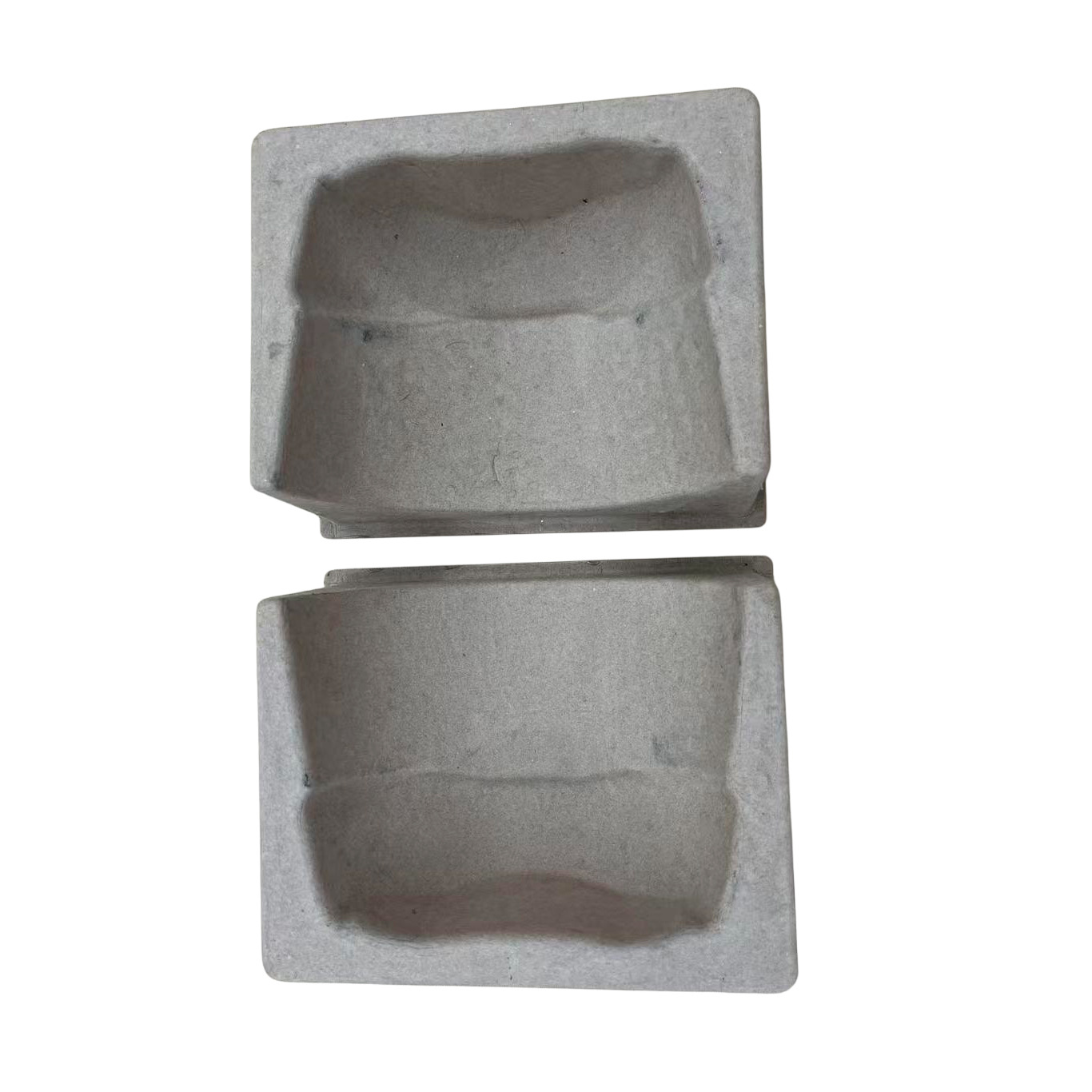
Molded pulp trays are fiber-based protective packaging used across food, medical, cosmetic and electronics industries.
Businesses are reconsidering how products are protected during storage, transit and unboxing. Molded pulp has become a practical alternative to plastic foam and vacuum-formed plastic inserts because it is made from renewable plant fibers and can be recycled or composted after use.
What Is Molded Pulp Packaging?
Molded pulp, also called molded fiber, is a packaging material produced by forming natural plant fibers into three-dimensional shapes. It is made from materials such as sugarcane pulp, bamboo pulp and wood pulp. The finished products are commonly called molded pulp trays, pulp packaging trays or molded fiber trays.
Molded pulp trays are shaped by wet-press or dry-press molding processes and can be manufactured with different thickness, density and surface treatments to meet specific product protection needs. They are widely used as inner protective packaging in food, beverage, electronics, appliance, medical, cosmetic and gift packaging.
Why Replace Plastic Foam and Conventional Inserts?
The main challenge for packaging buyers is finding a solution that protects fragile products without creating waste, compliance or cost problems.
Conventional packaging choices have trade-offs. EPS foam is lightweight but difficult to recycle and leaves plastic residue. Vacuum-formed plastic offers precise fit but relies on petrochemical resin. Corrugated inserts can be recycled, but they often do not hold complex product shapes firmly or provide the same level of shock absorption as molded fiber.
Regulatory pressure is also increasing. The European Union's Packaging and Packaging Waste Regulation (EU) 2025/40, which entered into force on February 11, 2025, requires all packaging placed on the EU market to be recyclable by January 1, 2030. Recyclable and biodegradable fiber trays align with this direction.
Molded Pulp Market and Industry Context
The molded pulp packaging market is growing. Grand View Research values the global molded pulp packaging market at USD 6.2 billion in 2025 and projects it to reach USD 10.2 billion by 2033. In 2025, the tray segment accounted for more than 41% of global revenue, and Asia Pacific held the largest regional share at 41.0%.
Healthcare is another high-growth area. Molded pulp trays for medical devices are projected to grow at a CAGR of 8.6%, supported by sterilization compatibility and hospital plastic-reduction initiatives.
These figures explain why procurement teams, packaging engineers and brand owners are evaluating molded pulp trays as a core packaging option.
Detailed Solution: Molded Pulp Trays From Material to Finished Product
Tonghe Paper Co., LTD is a pulp molding manufacturer based in Dongguan, Guangdong Province, China. The company transforms recycled paper, bagasse fiber, bamboo pulp and wood pulp into biodegradable packaging solutions.
Its production base covers 23,000 m², with around 160 employees and 12 R&D engineers. The company reports a monthly capacity of up to 1,000 tons and an annual output of 12,000 tons. Export destinations include the EU, USA, Australia, Saudi Arabia, Malaysia and Brazil.
Raw Materials and Environmental Profile
Tonghe selects natural plant fibers such as sugarcane pulp, bamboo pulp and wood pulp. The company says no harmful chemical additives are added during processing. In a natural composting environment, the company reports that its products can reach 100% biodegradation within 28 days.
The products comply with international environmental standards including SGS RoHS and PFAS-free requirements. This makes the trays suitable for brands that need to manage plastic tax, export compliance and low-carbon supply chain goals.
Key Technical Parameters
Molded pulp trays can be specified according to density, thickness, strength and temperature range. The following parameters are used by Tonghe for molded pulp trays:
| Parameter | Typical Value |
|---|---|
| Raw materials | Sugarcane pulp, bamboo pulp, wood pulp; customization available |
| Wet pressure | 0.15 – 0.25 g/cm³ |
| Dry pressure | 0.28 – 0.45 g/cm³ |
| Thickness | 0.8 – 5.0 mm, customized as required |
| Moisture content | ≤ 8 – 12% |
| Edge crush strength | 3 – 8 kN/m |
| Compressive strength | 2 – 8 MPa |
| Applicable temperature | -20°C to +80°C; food grade can be used from -20°C to +120°C |
| Color | Natural color, white, yellow, or customized |
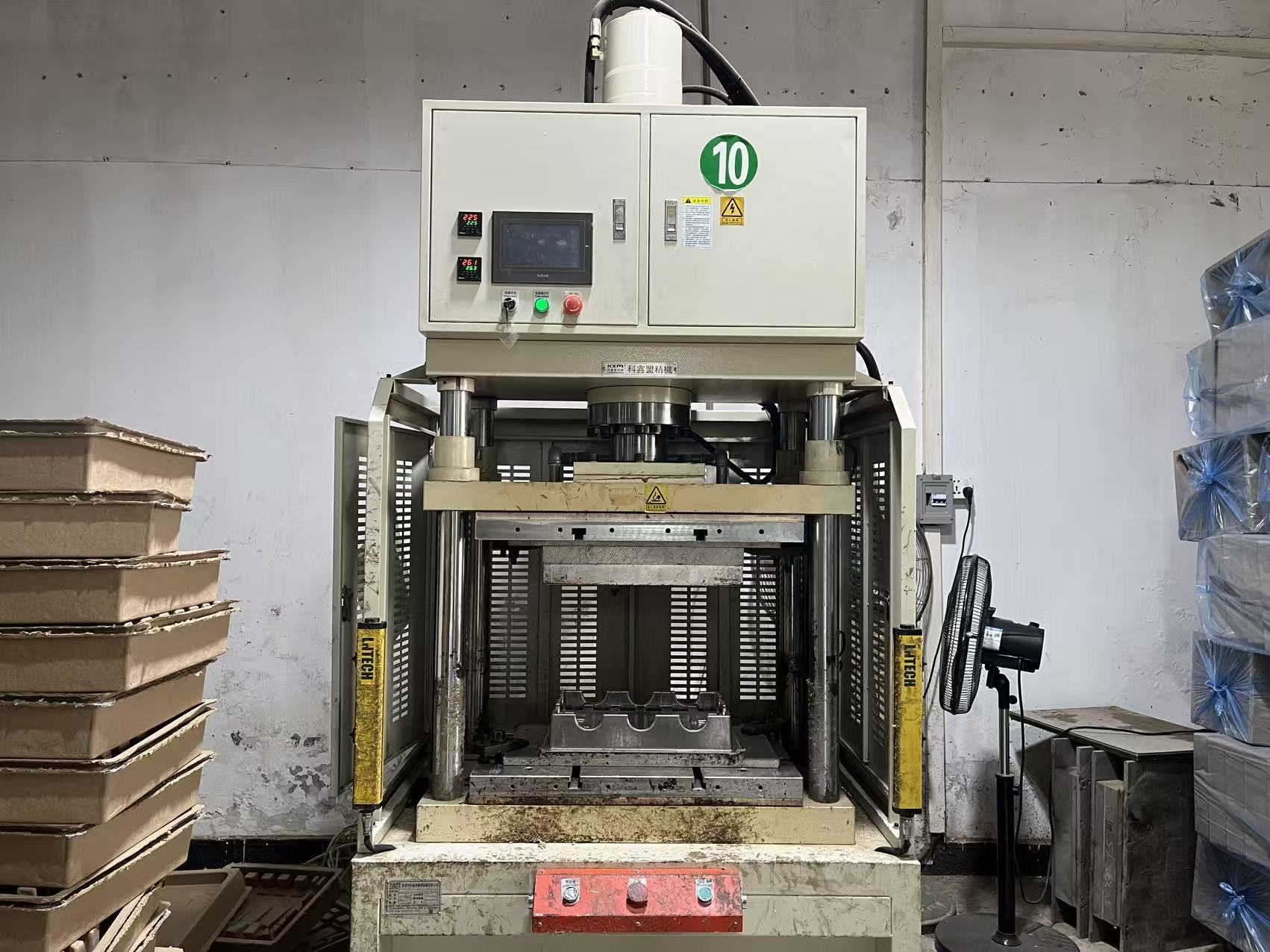
Hot pressing is one of the key process steps in molded pulp production.
Customization and Surface Options
Custom molded pulp trays can be developed for complex and irregular three-dimensional shapes. The mold design follows the contours of the product, allowing precise positioning and reduced movement during transit.
Available options include special coating, embossing and printing for brand presentation, plus calendering, waterproof and oil-proof treatment. Color can be matched to brand requirements, and different pulp formulations can be used for food contact, anti-static or moisture-resistant applications.
Tonghe lists OEM molded pulp tray as one of its main products, so buyers can request a dedicated molded fiber tray design for new or existing product lines.
Step-by-Step: How Custom Molded Pulp Tray Projects Work
Custom tray projects generally move through the following phases:
- Request and product analysis. The buyer shares product dimensions, weight, fragility and packaging requirements.
- Material selection. The supplier recommends sugarcane pulp, bamboo pulp, wood pulp or a blend based on cost, food contact needs and mechanical requirements.
- Mold design and tooling. An in-house mold department designs and machines the forming tool for the tray shape.
- Prototype and sample testing. Samples are produced and sent to the buyer for fit tests, drop tests or environmental checks.
- Mass production. After sample approval, production uses pulping, wet-press forming, drying, hot pressing and trimming equipment.
- Quality control and shipping. Finished trays are inspected, packed and shipped by sea, air or express.
At Tonghe, the mold department, workshop and trimming process are managed in-house, which supports faster iteration during sample development.
Use Cases by Industry
Food Service and Fresh Produce
Food grade molded pulp trays can be used for lunch boxes, hamburger boxes and cutlery packaging.
Food Grade Molded Pulp Trays are designed for food service and fresh produce applications. They are degradable and can be made from sugarcane pulp, bamboo pulp or wood pulp. The food-grade temperature range is -20°C to +120°C, making them suitable for hot and chilled food contact.
Medical Devices
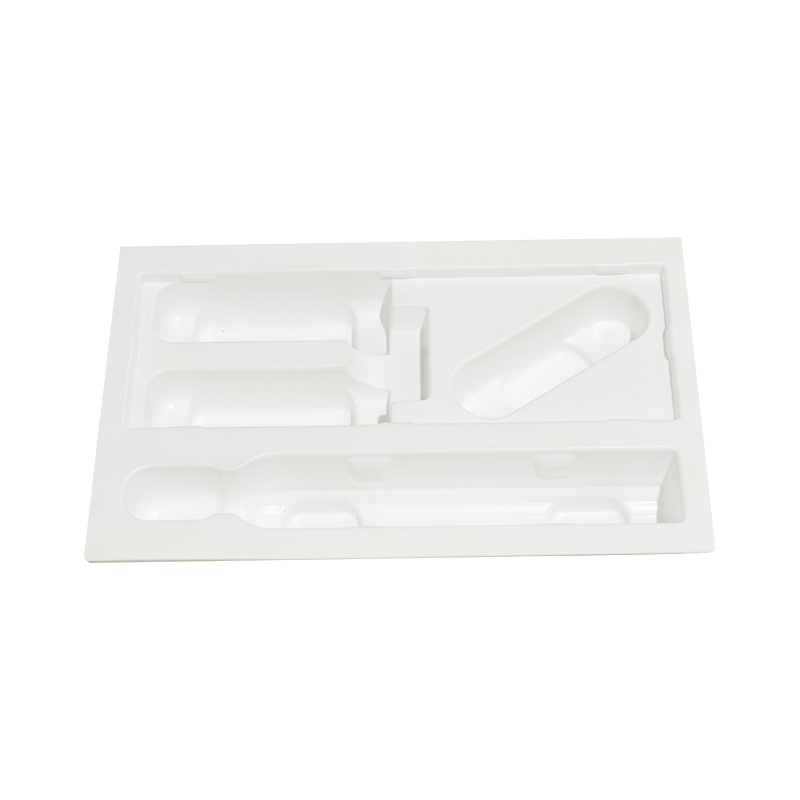
Medical device pulp trays are designed with precise cavities for probes, handles and surgical instruments.
Medical Device Pulp Trays support EO sterilization and are formed in one piece with precise positioning. They are described as low-dust and non-shedding, with virgin wood pulp free of fluorescent agents and produced in a clean workshop. Custom cavities can be designed for probes, handles, catheters and surgical instrument components.
Cosmetics and Personal Care
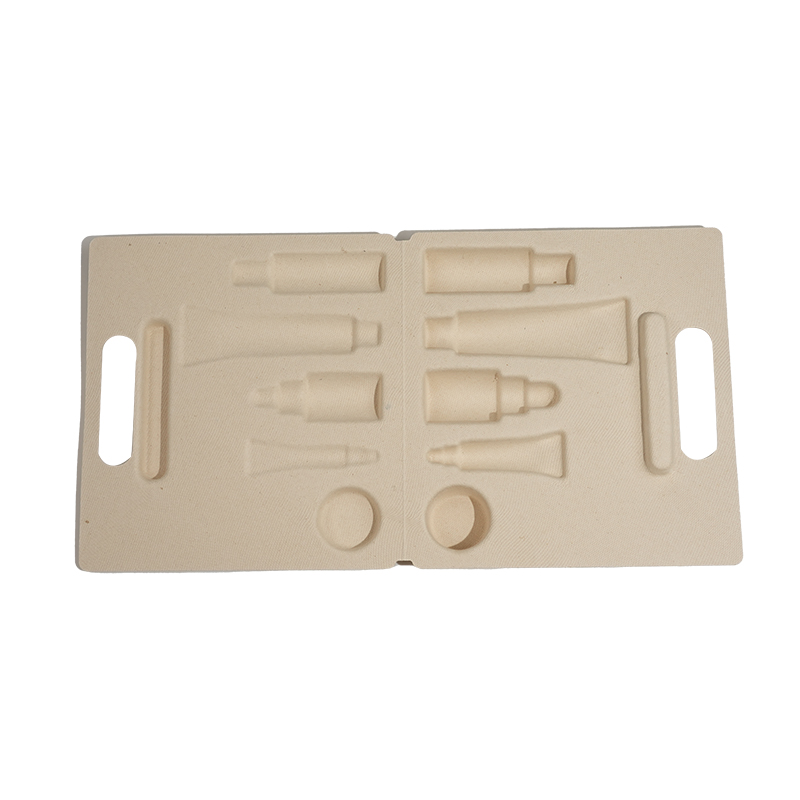
Cosmetic packaging pulp trays provide anti-scratch cushioning inside gift boxes.
Cosmetic Packaging Pulp Trays are used as inner packaging for bottles, jars and gift sets. They provide anti-scratch cushioning and stable physical protection, with customizable color, thickness and cavity layout.
Electronics, Appliances and Industrial Goods
Eco-Friendly Molded Fiber Trays can replace EPS foam and vacuum-formed plastic in electronics and appliance packaging. The integrated molded lining is resistant to pressure, impact and shock, and modified pulp can be made into an anti-static version for electronic components and connectors.
For fragile goods, these shockproof pulp trays help reduce transit damage. Biodegradable Pulp Trays are also used for 3C electronics, appliances, fresh produce, auto parts, hardware, toys and handicrafts. These trays are plastic-free, can be processed as kitchen waste in some applications, and support recycling after use.
Comparison Table: Molded Pulp Tray Types at a Glance
The table below compares common molded pulp tray categories based on typical applications and product features.
| Tray Type | Typical Applications | Key Features |
|---|---|---|
| Food Grade Molded Pulp Trays | Food service, lunch boxes, cutlery, fresh produce | Degradable, food-contact safe, usable from -20°C to +120°C |
| Medical Device Pulp Trays | Probes, handles, catheters, surgical instruments | EO sterilization support, precise cavities, low dust, no shedding |
| Cosmetic Packaging Pulp Trays | Bottles, jars, gift sets | Anti-scratch cushioning, customizable color and thickness |
| Eco-Friendly Molded Fiber Trays | 3C electronics, appliances, hardware, medical inner packaging | Pressure/impact/shock resistant, anti-static options, moisture-resistant treatment |
| Biodegradable Pulp Trays | Electronics, food, beverage, produce, auto parts, toys | Fully biodegradable, zero plastic, recyclable, no microplastic residue |
How to Choose a Molded Pulp Supplier
When evaluating suppliers for custom molded pulp trays, consider the following criteria:
- Factory capability: Does the supplier control pulping, molding, drying and trimming in-house?
- Mold development: Can the supplier design complex irregular shapes, not only simple trays?
- Material transparency: Are raw materials and additives clearly stated?
- Certification and compliance: Can the supplier provide documentation for food contact, export compliance and environmental standards?
- Sample support: Is it possible to test free samples before volume production?
- Production capacity: Can the factory handle the expected order volume and delivery schedule?
Tonghe reports its production area at 23,000 m², 160 employees and monthly capacity of up to 1,000 tons, and supports free samples for comparison and testing.
FAQ
Are molded pulp trays food-safe and compliant with environmental regulations?
Food Grade Molded Pulp Trays are made from sugarcane pulp, bamboo pulp or wood pulp, and are degradable. Food-grade versions can be used from -20°C to +120°C. Tonghe states that its products comply with SGS RoHS and PFAS-free requirements, and that complete biodegradation can occur within 28 days in a natural composting environment.
Can molded pulp trays be customized for complex product shapes?
Yes. Custom Molded Pulp Trays can be developed with multi-specification, complex irregular integrated structures. Tonghe's in-house mold department designs tooling that fits the contours of the product. Surface options include special coating, embossing, printing, calendering, and waterproof or oil-proof treatment.
Does molded pulp packaging reduce logistics and storage costs?
Molded pulp trays are lightweight. Tonghe states that its upgraded pulp products are about 50% lighter than traditional hard gift boxes, while maintaining structural strength and stacking stability. Lighter packaging can help reduce long-distance transport volume and storage space, although total cost depends on product dimensions, order quantity and logistics route.
Can I get free samples for testing before placing an order?
Yes. Tonghe supports customers in taking free samples for comparison and testing. Buyers can test thickness, moisture resistance, shock absorption, fit and compatibility with their own products before committing to mass production.
What payment terms and shipping methods do you accept?
Tonghe accepts T/T and Alibaba Trade Assurance. Shipment can be arranged by sea, air or express (DHL/FedEx/UPS). For a quote or custom tray evaluation, contact Annie at thpulpmolding@163.com or WhatsApp +86 132-3838-9288, and provide your destination port or address to calculate freight cost.
Conclusion
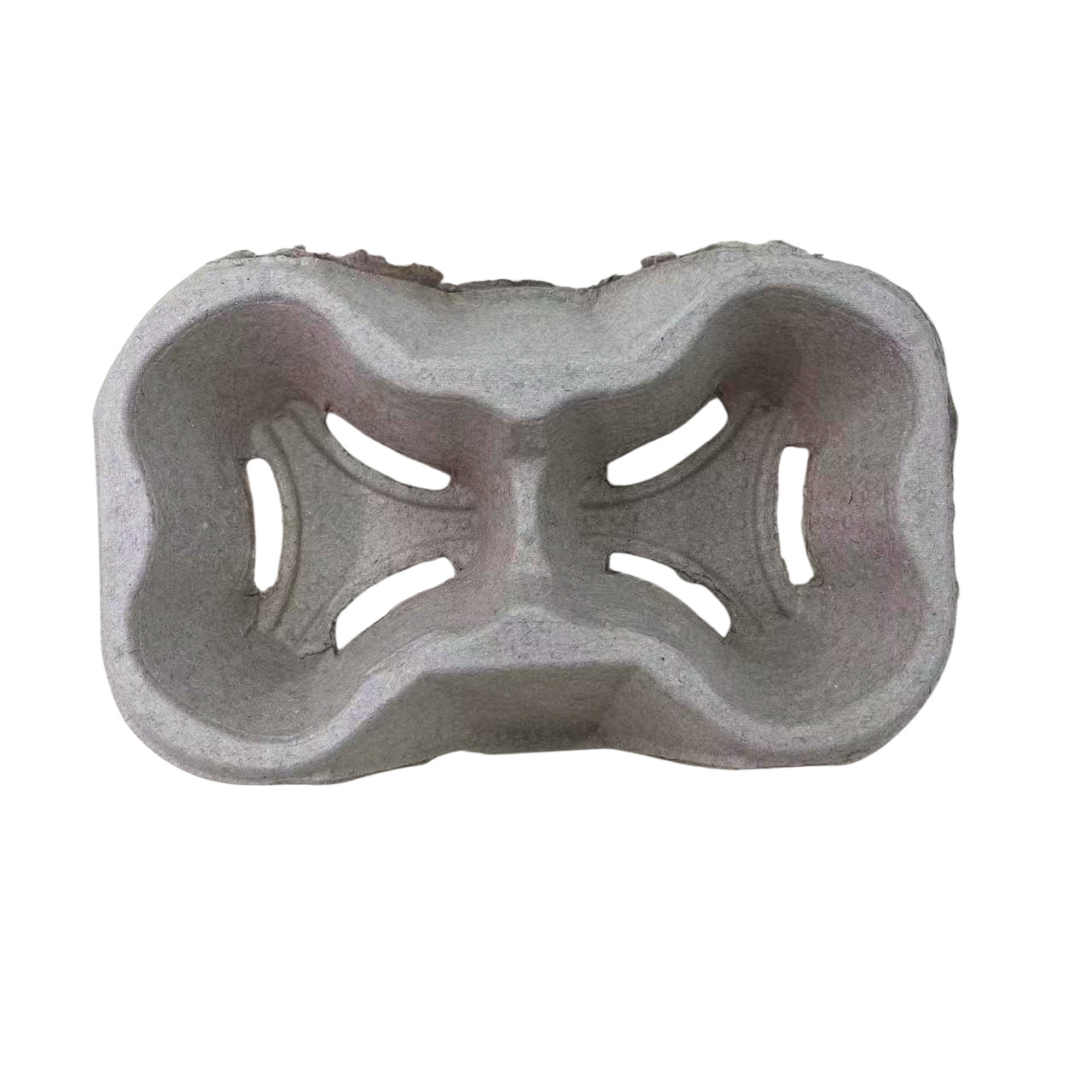
Custom molded pulp trays can be designed to match product contours and brand requirements.
Molded pulp trays offer a fiber-based, biodegradable solution for protective packaging across food, medical, cosmetic, electronics and industrial applications. For procurement teams moving from awareness to supplier research, the key is to verify material transparency, mold capability, production capacity and sample support.
Tonghe Paper Co., LTD provides custom molded pulp trays with in-house mold development, a monthly capacity of up to 1,000 tons, and support for free sample testing. If you are evaluating eco-friendly fiber packaging for a new product, ask for a sample and request a specification review.
Have Questions or Need More Details?
Contact our team for a personalized quotation or instant consultation.
Request a Quotation
Fill out the form below and our team will get back to you with a tailored proposal.
WhatsApp Direct Chat
Prefer to chat in real-time? Message us on WhatsApp for instant assistance & quick answers.
- Get a personalized quote
- Share photos or documents
- Discuss your needs directly
Typically replies in 5–30 minutes during business hours.