
Molded Pulp Trays by Application: A Practical Project-Fit Guide for Buyers
When a packaging buyer searches for “molded pulp,” the term can describe many different trays. Some are food-service trays, some are custom shockproof inserts for electronics, and others are medical device or cosmetic packaging trays. For a project to succeed, the tray must match the product’s weight, vulnerability, compliance needs, logistics route and end-of-life requirements.
This guide uses application-based examples from Dongguan, China-based Tonghe Paper Co., Ltd. (Tonghe Paper). Tonghe Paper is a molded pulp manufacturer with in-house mold development, forming and hot-pressing capability. The company exports to markets such as the EU, USA, Australia, Saudi Arabia, Malaysia and Brazil, so the product data here is practical for packaging buyers who need to evaluate molded pulp trays before committing to an order.
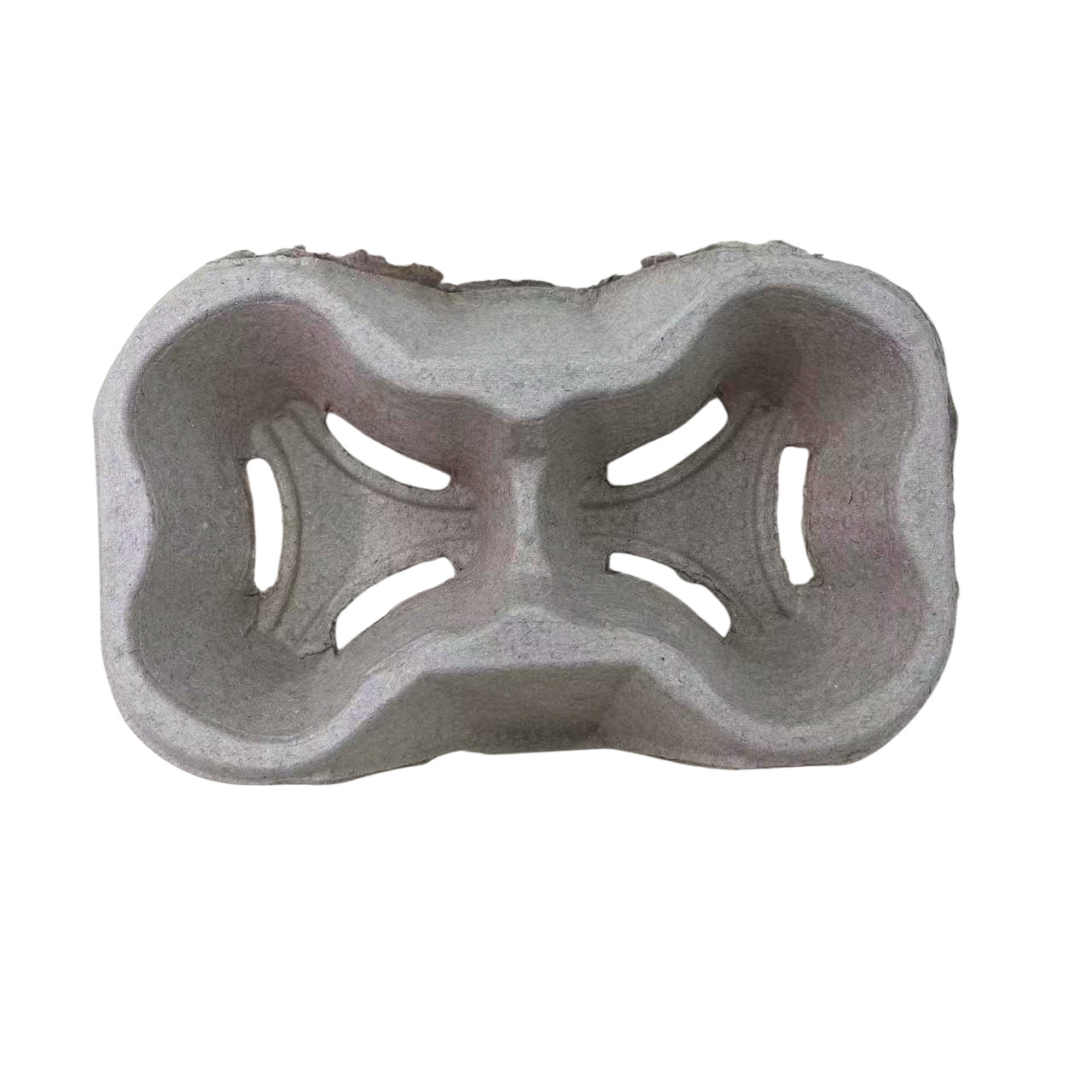
Problem Definition: A Generic Tray Is Still a Specification Risk
Molded pulp is a structural material, but it is not one fixed specification. Tonghe Paper’s product range includes Food Grade Molded Pulp Trays, Cosmetic Packaging Pulp Trays, Medical Device Pulp Trays, Biodegradable Pulp Trays, Eco-Friendly Molded Fiber Trays, Pulp Packaging Trays, Custom Molded Pulp Trays and Molded Pulp Trays. These families are made from similar plant-fiber raw materials, but their cavity shapes, surface treatment and compliance expectations are different.
If a buyer only says “eco-friendly tray,” the supplier may deliver a tray that is recyclable but does not hold the product securely, has excessive thickness, or reacts poorly to the surrounding packaging environment. Project-level decisions should include product fragility, operating temperature, contact with moisture, printing requirements, stacking orientation and the level of protection needed during distribution.
Industry Background: Regulation and Market Pressure Increase Application Fit
The global molded pulp packaging market was estimated at USD 6.2 billion in 2025 and is projected to reach USD 10.2 billion by 2033, according to Grand View Research. In the same report, the tray segment represented more than 41% of market revenue in 2025, signaling that trays are the most common molded pulp format.
Regulation is also pushing the category forward. The European Packaging and Packaging Waste Regulation (EU) 2025/40 entered into force on February 11, 2025, and requires packaging to be recyclable by January 1, 2030. Molded pulp can fit that recyclable-packaging direction, especially when the production route starts with wood pulp, bamboo pulp or sugarcane pulp. For medical devices, Mordor Intelligence projects an 8.6% CAGR for molded pulp used in healthcare, driven by sterilization standards and hospital plastic restrictions.
Detailed Solution: Molded Pulp Tray Families by Application
Below are the molded pulp tray families most relevant to project procurement decisions. Buyers can use these categories as a shortlist, then verify actual mold design, material documentation and test data before ordering.
Food service and fresh produce: Food Grade Molded Pulp Trays
Food service projects usually involve disposable trays for cutlery, hamburgers, lunch boxes and food-contact containers. Tonghe Paper’s Food Grade Molded Pulp Trays can be supplied in sugarcane pulp, bamboo pulp or wood pulp, with natural, white or yellow color. The product specification lists thickness between 0.8 mm and 5.0 mm, edge crush strength of 3-8 kN/m, compressive strength of 2-8 MPa and moisture content below 8-12%. While standard molded pulp is rated at -20°C to +80°C, the food-grade version can be used at -20°C to 120°C.
Food-grade suitability should always be confirmed for the specific material and coating used. The supplier should provide food-contact documentation when the tray will directly touch food.
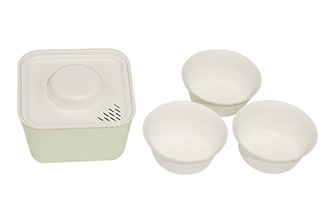
Cosmetics and daily chemical packaging: Cosmetic Packaging Pulp Trays
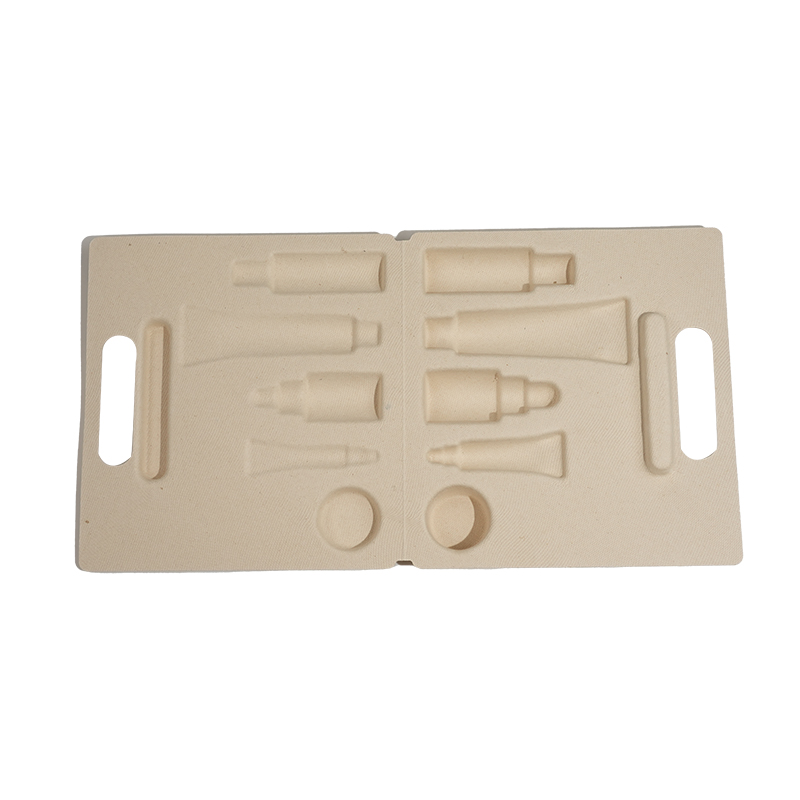
Beauty packaging often uses an inner tray to hold bottles inside a folding carton or gift box. The Cosmetic Packaging Pulp Trays product family is positioned as a degradable pulp material with a custom-fit insert structure, anti-scratch cushioning protection and customizable color and thickness. Tonghe Paper also offers special coating, embossing and printing services, which allows the tray to support brand presentation while still providing inner protection.
Medical devices and surgical components: Medical Device Pulp Trays
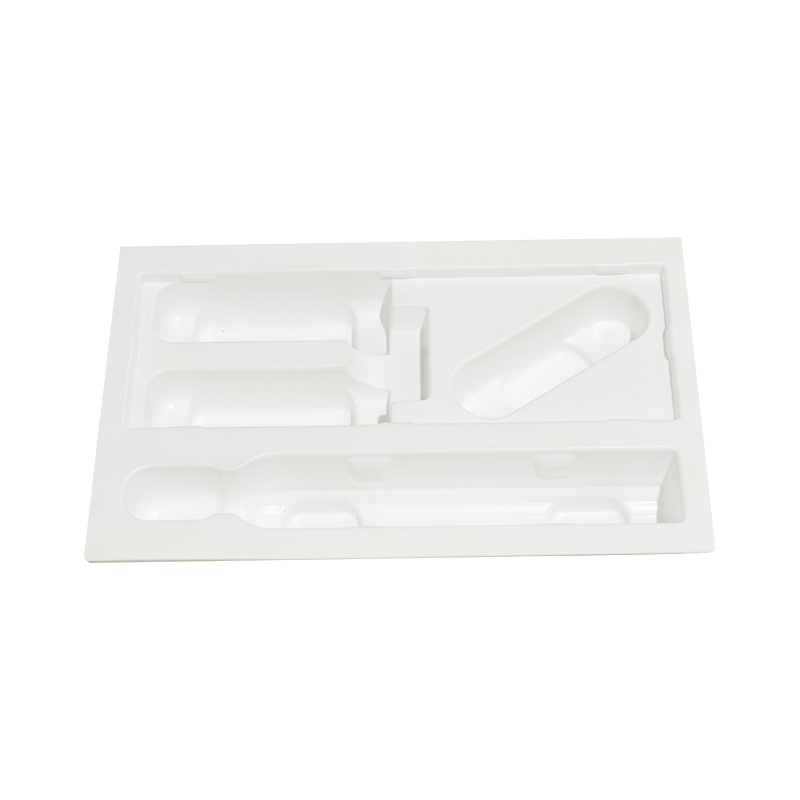
Medical Device Pulp Trays are a separate specification category. Tonghe Paper’s medical tray line is one-piece molded for precise positioning, and it supports EO sterilization according to the product note. The tray is made from virgin wood pulp, is free from fluorescent agents, is produced in a clean workshop, and is supplied with a material inspection report. Cavities can be customized for probes, handles, catheters, surgical instruments and other nursing supplies.
Because medical tray materials may contact devices and packaging lines, the buyer should obtain the material inspection report and confirm sterilization compatibility before production.
Electronics, appliances and hardware: Eco-Friendly Molded Fiber Trays or Custom Molded Pulp Trays
Industries that handle fragile products usually prioritize shock absorption. Eco-Friendly Molded Fiber Trays are designed as integrated molded inner linings that resist pressure, impact and shock. The corners and edges can be shaped to fit product contours, reducing movement and damage during transport. Tonghe Paper also states that anti-static options can be made from modified pulp, which is relevant for electronic components and connectors. These trays can replace EPS foam and vacuum-formed plastic liners.
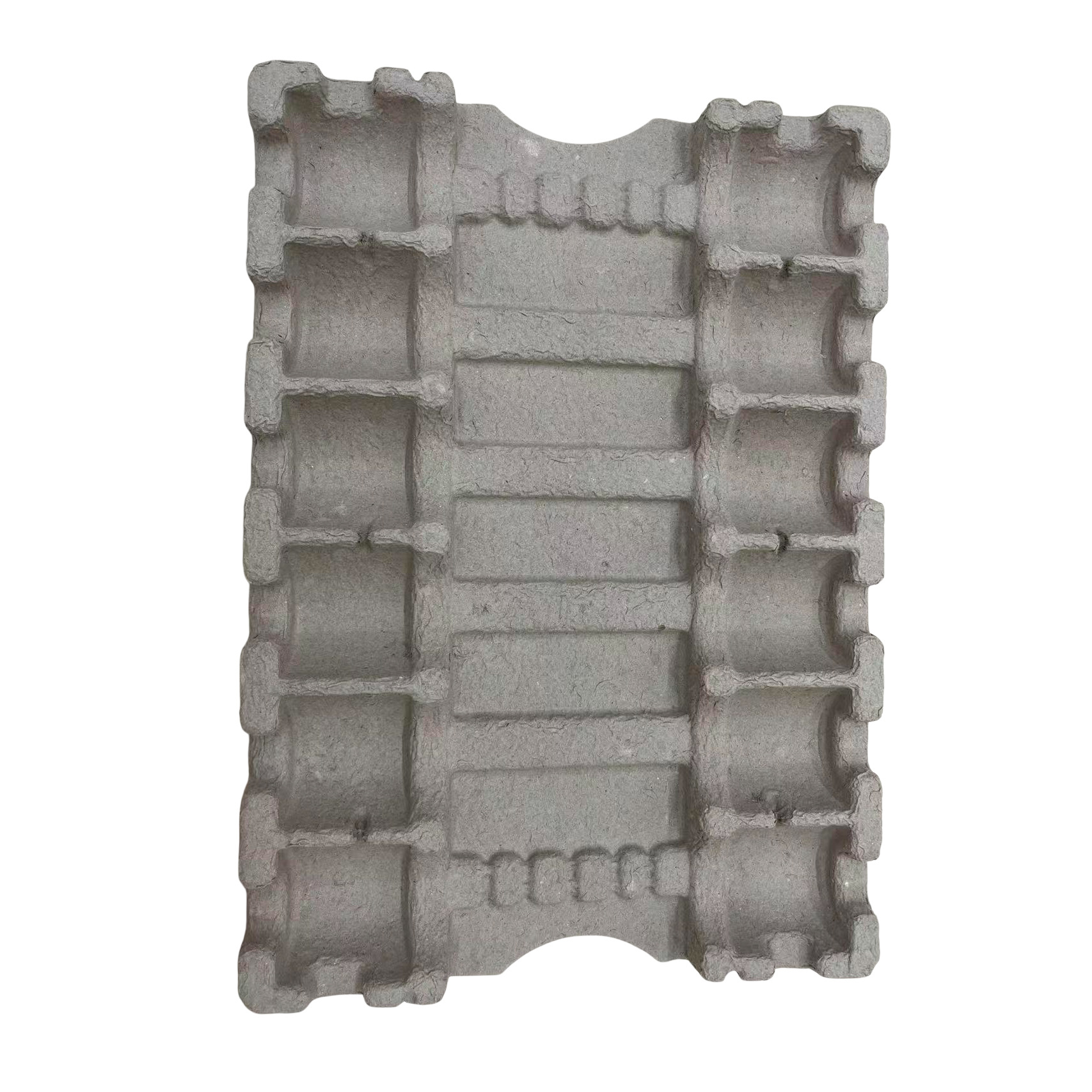
Multi-purpose turnover and protective packaging: Pulp Packaging Trays / Custom Molded Pulp Trays
For operations that need stackable or printable pulp packaging, Pulp Packaging Trays can replace foam and plastic vacuum-formed trays. Some styles can be stacked to save storage space. Custom Molded Pulp Trays allow the tray to be shaped around one exact product or a set of components. Because Tonghe Paper has an in-house mold department, buyers can review mold development for complex, irregular one-piece structures before moving to mass production.
Reference specification range for Tonghe molded pulp trays
| Parameter | Listed range in Tonghe’s molded pulp tray product data |
|---|---|
| Raw material | Sugarcane pulp, bamboo pulp, wood pulp or customized fiber blend |
| Thickness | 0.8 – 5.0 mm, customized as required |
| Moisture content | ≤ 8 – 12% |
| Edge crush strength | 3 – 8 kN/m |
| Compressive strength | 2 – 8 MPa |
| Applicable temperature | -20°C to +80°C in standard form; food-grade version can be used at -20°C to 120°C |
| Finish options | Natural, white or yellow; custom colors available |
These are catalog ranges from the product data, not a guarantee for every mold geometry. The supplier should validate the actual value for each product cavity and wall-thickness design.
Step-by-Step: How to Match a Molded Pulp Tray to a Project
Use the following workflow to translate a product brief into a molded pulp tray specification.
- Define the product profile. Record weight, dimensions, fragile zones, surface finish, moisture sensitivity and tolerance for movement. The cavity design depends on these details.
- Map logistics and storage. Describe how the tray will be used: single pack, gift box, mail-order box, pallet display, distribution center, or automatic packaging line. Molded pulp trays are often specified as inner protective packaging for static storage and transport cushioning.
- Check compliance requirements. Decide whether the tray must be food-contact safe, suitable for medical device sterilization, recyclable, or export-ready for markets with plastic-packaging regulation. These requirements determine the raw material and surface treatment.
- Involve the mold engineering team early. Check whether the product needs irregular cavities, locking features, multiple compartments or special edge protection. Tonghe Paper can customize material, color, LOGO, anti-static function and moisture-proof function.
- Request samples. Compare free samples or pre-production samples with the real product. Check wall thickness, fit, edge coverage, moisture resistance and stacking behavior.
- Review quality control. In a molded pulp project, ask about incoming material inspection, in-process inspection and final inspection. Tonghe Paper lists IQC/IPQC/FQC as its quality-control points.
- Confirm supply-chain terms. For custom molded pulp trays, confirm MOQ, lead time, monthly capacity and shipping method. Tonghe Paper reports a monthly capacity of up to 1,000 tons, a standard MOQ of 1,000 pieces and a production lead time of 15-30 days.
Use Cases: Where the Tray Family Changes the Project Outcome
Foodservice and supermarket turnover. One recorded Tonghe use case involves restaurants and supermarkets using 2,000 units of disposable molded pulp trays for transport and turnover. The stated result was shockproof and shatterproof handling, with environmental protection as a key buying highlight. In this type of order, the buyer should confirm whether the tray needs food-grade certification or only protective packaging capability.
Medical device export packaging. Medical device exporters often need a custom tray with precise positioning and low dust characteristics. Tonghe’s Medical Device Pulp Trays can be made from virgin wood pulp without fluorescent agents, with customized cavities for probes, handles and surgical instruments. The degradable and recyclable nature of the material can help exporters respond to plastic-tax considerations in European and American markets.
Branded cosmetic and gift packaging. Cosmetic Packaging Pulp Trays can be used as a custom-fit insert in a rigid carton or gift box. Because the tray can be made with a customized cavity, it prevents bottles from shifting. Printing and embossing options allow the inner packaging to reinforce the brand image.
Application Comparison: Which Molded Pulp Tray Fits First?
| Project scenario | Product family used by Tonghe Paper | Primary fit reason from product data | Buyer action |
|---|---|---|---|
| Food service / disposable tableware / fresh-produce operation | Food Grade Molded Pulp Trays | Degradable pulp material; food-grade version supports -20°C to 120°C; spoon, fork, knife, hamburger and lunch-box tray forms are available | Confirm food-contact documentation and coating suitability |
| Cosmetic brand / beauty and gift packaging | Cosmetic Packaging Pulp Trays | Custom-fit insert structure; anti-scratch cushioning; customizable color and thickness | Test fit with actual bottle contours and finishing details |
| Medical device / surgical instrument / nursing supplies | Medical Device Pulp Trays | Precise positioning, custom cavities, low dust and no shedding; virgin wood pulp without fluorescent agents; EO sterilization support | Request material inspection report and review sterilization compatibility |
| 3C electronics / lighting / home appliances / hardware | Eco-Friendly Molded Fiber Trays / Custom Molded Pulp Trays | Shock-absorbing integrated molding; pressure and impact resistance; anti-static options available | Map fragile components, contact points and stacking orientation |
| Distribution / turnover packaging and brand display | Pulp Packaging Trays | Can replace foam and vacuum-formed liners; printing and embossing allow branding; some styles stack | Evaluate repeated handling, stacking and logistics damage criteria |
Application-Fit FAQ for Molded Pulp Tray Buyers
Are molded pulp trays recyclable and compliant for export?
Molded pulp trays made from plant fibers can be recyclable and biodegradable. Tonghe Paper uses natural wood pulp, bamboo pulp or sugarcane pulp and states that its materials support complete recycling and circulation. The company reports that, in a natural composting environment, the material can reach 100% biodegradation within 28 days. Tonghe Paper also designs products to meet international environmental standards including SGS RoHS and PFAS-free requirements.
Can molded pulp trays be customized to my product shape?
Yes. Custom Molded Pulp Trays are built for a specific product or component set. Tonghe Paper can customize material, color, LOGO and add functions such as anti-static or moisture-proof properties. The factory has an in-house mold department and can develop complex, irregular integrated structures rather than being limited to regular shapes.
What is the standard MOQ and lead time for custom molded pulp trays?
Tonghe Paper lists a standard MOQ of 1,000 pieces, with a production lead time of 15 to 30 days. The company reports a monthly capacity of up to 1,000 tons. For custom mold projects, MOQ and timing should be checked with the engineering team before quoting.
Can I request molded pulp tray samples before a full order?
Tonghe Paper supports customers in taking free samples for comparison and testing. Send product dimensions, fragility notes and expected distribution conditions. The sample check should compare wall thickness, edge protection, moisture resistance and how firmly the product stays in the cavity.
What payment terms and shipping methods does Tonghe Paper accept?
Tonghe Paper accepts T/T and Alibaba Trade Assurance. Shipment can be arranged by sea, air or express such as DHL/FedEx/UPS. To calculate freight cost, provide the destination port or address. You can contact Tonghe Paper sales at thpulpmolding@163.com or +86 132-3838-9288.
Conclusion
Molded pulp trays work best when selected by project scenario, not by material alone. Food service, cosmetics, medical devices, electronics, fresh produce and industrial distribution each create different demands for cavity design, protection, material documentation and appearance. The practical starting point is to identify the product’s fragility, applicable standard and logistics route, then choose a tray family that can be customized around those constraints.
For buyers evaluating a molded pulp tray supplier, the next step is usually a sample test. Use the specification range and application comparison table above as a discussion document, then request a sample that matches the actual product geometry.
Next step for your packaging project
If you need a molded pulp tray for food, cosmetics, medical, electronics or industrial packaging, contact Tonghe Paper to discuss mold development and samples.
Email: thpulpmolding@163.com
Tel / WhatsApp: +86 132-3838-9288
Website: www.tonghepulp.com
Download the company brochure: Tonghe Paper brochure (PDF)
Have Questions or Need More Details?
Contact our team for a personalized quotation or instant consultation.
Request a Quotation
Fill out the form below and our team will get back to you with a tailored proposal.
WhatsApp Direct Chat
Prefer to chat in real-time? Message us on WhatsApp for instant assistance & quick answers.
- Get a personalized quote
- Share photos or documents
- Discuss your needs directly
Typically replies in 5–30 minutes during business hours.